
The F1 Savannah cat is one of the rarest and most expensive cat breeds in the world. Its price is usually much higher than that of a regular domestic cat because of its unique appearance and exotic bloodline. Many people are attracted to its tall body, spotted coat, and wild-looking features.
The cost of an F1 Savannah cat can range from several thousand dollars to over $20,000, depending on factors such as breeder reputation, age, gender, and pedigree. Buyers should also consider ongoing expenses like food, veterinary care, and insurance. Understanding the full cost can help you decide whether this special breed is the right pet for your home.
What is the F1 Savannah Cat Price?
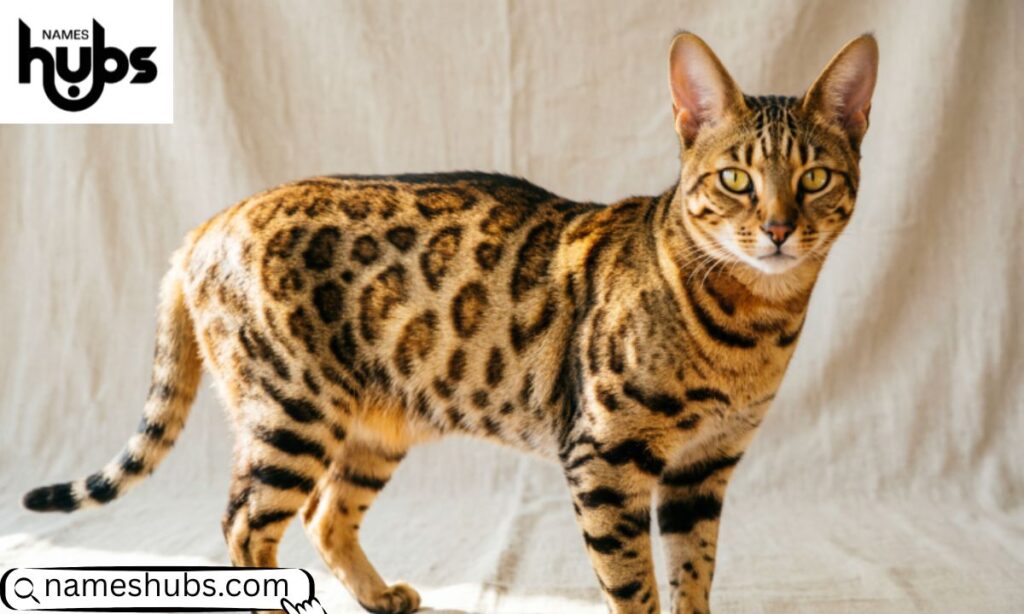
The F1 Savannah cat is the first-generation cross between a domestic cat and a serval. Because of its rare bloodline, large size, and exotic appearance, it is usually the most expensive Savannah cat generation. Many people choose F1 Savannah cats for their unique look and active personality.
The price of an F1 Savannah cat generally ranges from $10,000 to $25,000 or even higher. Some kittens with exceptional lineage, rare markings, or breeding rights may cost much more. The final price often depends on the breeder, location, and the cat’s overall quality.
Factors Affecting F1 Savannah Cat Price
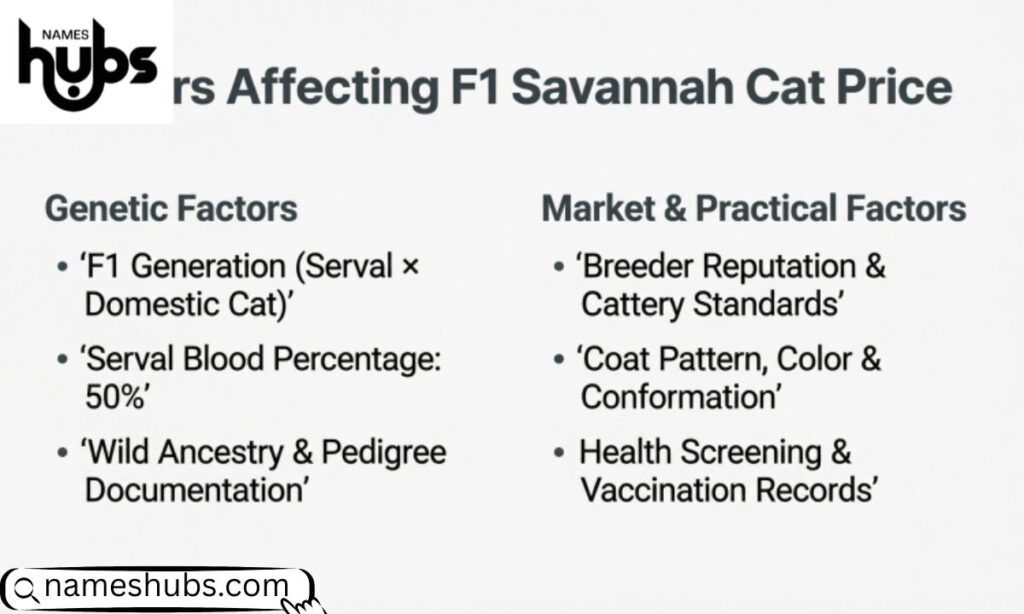
Several factors can influence the cost of an F1 Savannah cat. Bloodline quality, breeder reputation, age, gender, and coat pattern are among the most important considerations. Cats from well-known breeders often come with a higher price because of careful breeding practices.
Availability also plays a major role in pricing. Since F1 Savannah cats are rare and difficult to breed, demand often exceeds supply. Additional costs such as vaccinations, health certificates, registration papers, and transportation can further increase the total amount a buyer may need to pay.
Generation
The generation of a Savannah cat plays an important role in its characteristics and price. Early generations, such as F1 and F2, are closer to their wild ancestors and often have more exotic features.
Later generations are usually easier to care for and adapt well to family life. Understanding the generation helps buyers choose a cat that matches their lifestyle and experience level.
Appearance
A Savannah cat’s appearance can greatly influence its value. Cats with bold spots, long legs, large ears, and a sleek body are often more desirable among enthusiasts.
Many buyers look for a cat that closely resembles its wild ancestors. Unique markings and a strong physical appearance can make a Savannah cat stand out from others.
Breeder Reputation
A reputable breeder focuses on the health, care, and socialization of their cats. They provide proper records and answer questions about the kitten’s background and health.
Choosing a trusted breeder can give buyers greater confidence in their purchase. Good breeders also offer support and guidance after the kitten goes to its new home.
Location
The location of the breeder can affect the overall cost of getting a Savannah cat. Transportation, local demand, and regional availability often influence pricing.
In some areas, Savannah cats are more common, while in others they may be harder to find. Buyers should also consider travel and delivery expenses when planning their purchase.
Legal Restrictions
Some regions have rules regarding the ownership of Savannah cats, especially the earlier generations. These regulations can vary from one state or country to another.
Before purchasing a Savannah cat, it is important to check local laws and requirements. Understanding these restrictions can help avoid legal issues and ensure responsible ownership.
F1 Savannah Cat Price Range
The price of an F1 Savannah cat is usually much higher than most other cat breeds. These cats are the first-generation offspring of a domestic cat and a serval, which makes them rare and highly sought after. Because of their unique appearance and limited availability, breeders often charge premium prices.
The cost of an F1 Savannah cat generally ranges from $10,000 to $25,000 or more. The final price depends on factors such as the breeder’s reputation, the kitten’s bloodline, age, health records, and physical characteristics. Kittens with several strong features often fall on the higher end of the price range.
Before purchasing an F1 Savannah cat, it is important to consider additional expenses beyond the initial price. Food, veterinary care, insurance, and large living spaces can add significantly to the overall cost of ownership. Taking these factors into account can help you decide if this unique breed is the right fit for your lifestyle.
Low-Quality Breeds
Low-quality breeds are usually cats that do not fully meet breed standards. They may have differences in appearance, coat patterns, body structure, or eye color. These cats are often kept as pets rather than for breeding or competitions.
Although they are called low-quality breeds, they can still be loving and healthy companions. Many families choose them because they are more affordable. Their personality and friendliness can be just as enjoyable as those of higher-priced cats.
Good-Quality Breeds

Good-quality breeds closely match the standard characteristics of their breed. They often have desirable features, good health records, and attractive appearances. These cats are popular among pet owners looking for a balance between quality and price.
Many good-quality cats come from responsible breeders who focus on proper care and socialization. They are often well-adjusted and easy to live with. Their combination of beauty and temperament makes them a common choice for families.
High-End Breeds
High-end breeds represent the top level of breed quality and appearance. They usually have excellent bloodlines, rare traits, and strong adherence to official breed standards. These cats are often sought after by enthusiasts and professional breeders.
Because of their pedigree and unique qualities, high-end breeds are generally more expensive. They may also participate in cat shows and breeding programs. Owners often value them for their exceptional looks, lineage, and overall quality.
Considerations for Potential Owners to Own an F1 Savannah Cat
Before bringing home an F1 Savannah Cat, it is important to understand its unique needs. These cats are highly active, intelligent, and energetic compared to many other domestic breeds. They require plenty of space to explore, climb, and play every day.
Potential owners should also consider the cost of ownership. In addition to the purchase price, expenses such as high-quality food, veterinary care, toys, and large cat enclosures can add up over time. Proper budgeting helps ensure the cat receives the care it needs.
F1 Savannah Cats form strong bonds with their owners and enjoy regular interaction. They do not do well when left alone for long periods and may become bored without mental stimulation. Interactive toys and daily play sessions are important for their well-being.
It is also important to check local laws and regulations before purchasing an F1 Savannah Cat. Some regions have restrictions on owning hybrid cats due to their wild ancestry. Researching legal requirements in advance can help avoid future complications.
The Best Savannah Breeders
Savannah cat dhundna ek exciting lekin careful process hai, aur sahi breeder ka chunna sabse pehla aur zaroori qadam hota hai. Ache breeders woh hote hain jo sirf bechne ke liye nahin balke apni cats ki sehat aur behavior ka poora khayal rakhte hain. Reputable breeders apne kittens ko proper vaccinations, health guarantees aur detailed paperwork ke saath dete hain. Yahi wajah hai ke genuine breeders se lena hamesha long-term mein behtar sabit hota hai.
Kuch famous Savannah breeders USA mein hain jaise A1 Savannahs, Titanics Savannahs aur Select Exotics, jo kaafi arsay se is field mein kaam kar rahe hain. Yeh log apni cats ko TICA ke standards ke mutabiq breed karte hain aur poori transparency ke saath kaam karte hain. Kisi bhi breeder se khareedne se pehle unka cattery visit karna aur parents ko dekhna bohot zaroori hai. Agar breeder visit allow na kare, toh yeh pehli warning sign hoti hai ke kuch theek nahi.
How Much Does a Savannah Cat Cost in 2026?
Savannah cat ki qeemat 2026 mein bohot zyada vary karti hai, aur yeh mainly cat ki generation par depend karti hai — jise “F” rating se measure kiya jata hai. F1 Savannah cats, jo wild serval ke sabse qareeb hoti hain, in ki price $10,000 se $25,000 tak ja sakti hai. Jaise jaise generation F2, F3 ki taraf jati hai, price gradually kam hoti chalti hai lekin phir bhi yeh common domestic cats se kaafi mehngi rehti hain. Beginner owners ke liye F4 ya F5 generation best hoti hai jo thodi affordable aur zyada friendly bhi hoti hai.
Price sirf khareedne ki cost tak mehdood nahin rehti — Savannah cats ki dekhbhal ka kharcha bhi aam biliyon se kaafi zyada hota hai. Inhe special diet, large space, aur regular vet checkups ki zaroorat hoti hai jo monthly budget par assar dalta hai. Insurance, toys, aur enrichment items bhi long-term cost mein shamil hain. Isliye agar aap Savannah lene ka soch rahe hain toh pehle apna poora budget aur lifestyle carefully evaluate kar lein.
How Much Are Savannah Cats?
Savannah cats ki qeemat unke generation level, coat quality aur breeder ki reputation ke hisaab se alag alag hoti hai. Generally F1 aur F2 cats sabse mahngi hoti hain kyunki inme serval ka percentage sabse zyada hota hai. Market mein F3 se F5 generation ki cats $1,500 se $5,000 ke darmiyan easily mil jati hain. Yeh price range un logon ke liye thodi accessible hoti hai jo exotic cat chahte hain lekin itna bada budget nahi rakhte.
Sirf kitten ki price dekh kar decision lena galat approach ho sakti hai, kyunki asli kharcha uske baad start hota hai. Monthly khane ka kharcha, vet fees, aur suitable environment banana — yeh sab milake ek significant investment banta hai. Kai log cheap options dhundte hain lekin phir baad mein health issues ki wajah se zyada kharch karte hain. Isliye hamesha certified breeder se lena aur proper cost planning karna samajhdari ki baat hai.
Domestic Longhair Cat Breed Profile
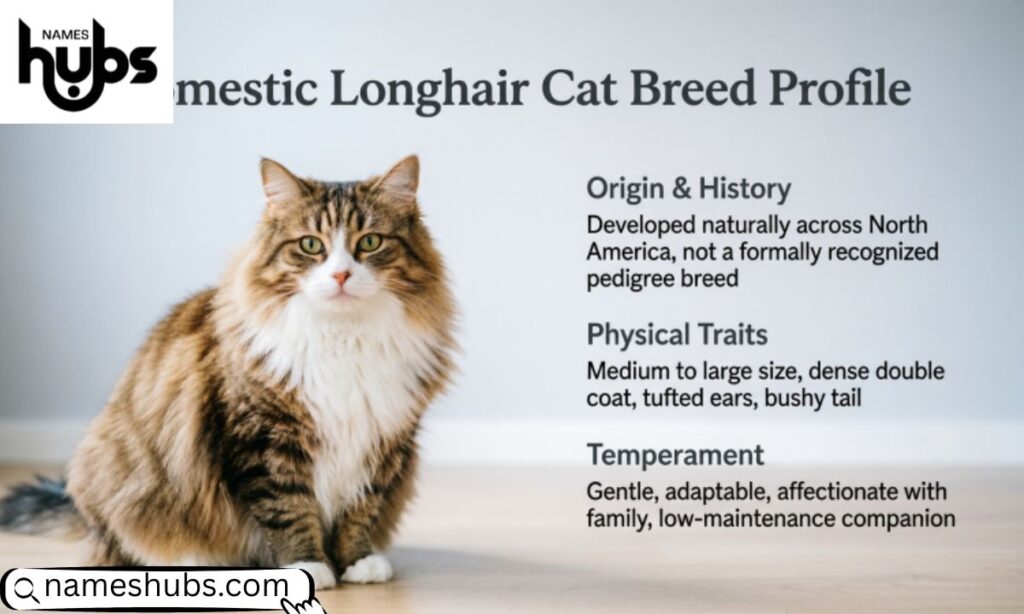
Domestic Longhair koi official breed nahi hai balke yeh ek category hai jo un cats ko cover karti hai jinka koi specific pedigree nahi hota lekin unke baal lambe aur khoobsurat hote hain. Yeh cats duniya bhar mein paye jate hain aur inki personality bohot diverse ho sakti hai — koi bohot friendly hoga toh koi thoda independent. Unka coat silky aur thick hota hai jo dekhne mein toh beautiful lagta hai lekin regular grooming mangta hai. Yahi wajah hai ke Longhair cats adopt karte waqt grooming routine ke liye mentally tayyar rehna zaroori hai.
Sehat ke lihaaz se yeh cats generally strong aur resilient hoti hain kyunki inki mixed genetic background hoti hai. Inhe purebred cats jitni genetic disorders hone ka risk kam hota hai, jo ek bada faida hai. Lifespan typically 12 se 18 saal ke darmiyan hoti hai agar proper care di jaye. Yeh cats family ke liye bohot suitable hain — bachon ke saath aur doosre pets ke saath bhi yeh achi tarah ghul mil jati hain.
Domestic Shorthair Cat Breed Profile
Domestic Shorthair cats are among the most popular and widely kept cats in the world, loved for their adaptability, friendly nature, and diverse appearances. These cats are not a purebred breed but rather a mix of various feline lineages, which gives them a unique genetic diversity that often results in strong health and a longer lifespan.
They come in almost every coat color and pattern imaginable, from solid black and white to tabby stripes and tortoiseshell patches. Their short, dense coat requires minimal grooming, making them an ideal choice for busy pet owners who want a loving companion without high maintenance demands.
How Big Will My Cat Get?
The size of a Domestic Shorthair cat can vary quite a bit depending on genetics, diet, and overall health. On average, these cats weigh between 8 to 10 pounds, though some males can reach up to 12 pounds or more when fully grown.
Most Domestic Shorthairs reach their full size by the time they are around 12 to 18 months of age. Providing a balanced diet and regular vet check-ups plays a major role in ensuring your cat grows to a healthy and comfortable size.
Domestic Longhair Cat Breed Profile
Domestic Longhair cats are elegant, affectionate companions known for their flowing, silky coats and gentle personalities. Like their shorthaired counterparts, they are not a recognized purebred but rather a mixed-breed cat with a naturally long coat that gives them a distinctly beautiful appearance.
These cats tend to be calm and easygoing, often forming deep bonds with their families and enjoying quiet indoor living. Their luxurious coat does require regular brushing a few times a week to prevent tangles and matting, but for most cat lovers, that grooming time becomes a cherished bonding ritual.
Domestic Shorthair Cat Breed Profile
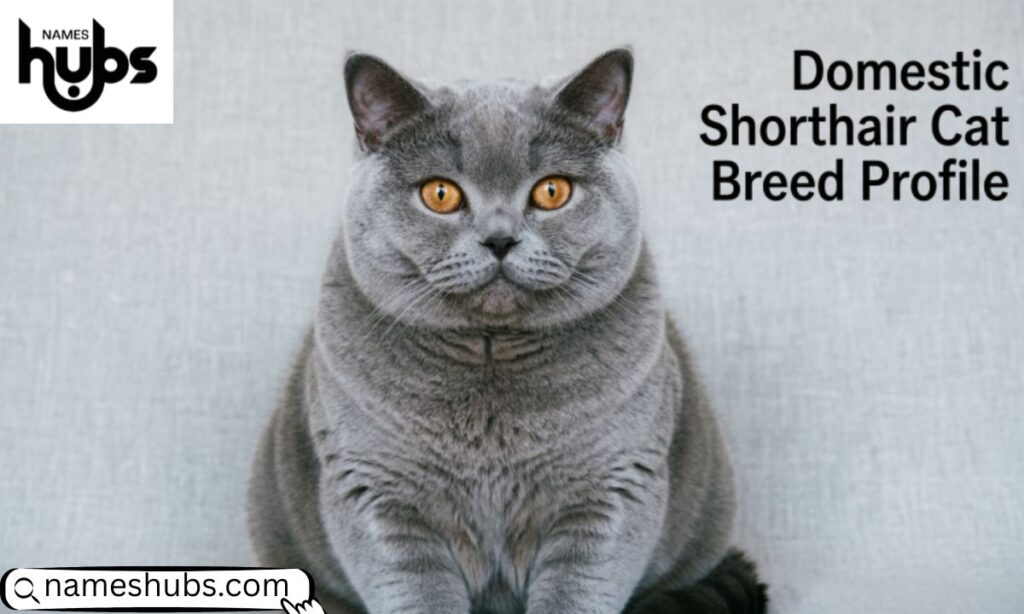
Domestic Shorthair cats are incredibly versatile and resilient animals that thrive in a wide range of home environments, from small apartments to large family houses. Their mixed genetic background makes them generally healthier than many purebred cats, as they are less prone to hereditary diseases and conditions.
These cats are known for their playful energy during kittenhood and their relaxed, affectionate nature as they mature into adults. Whether curled up in your lap or chasing a toy across the floor, a Domestic Shorthair brings endless joy and warmth to any household.
How Big Will My Cat Get?
Understanding your cat’s potential size helps you plan for the right food portions, bedding, and living space from an early stage. Female Domestic Shorthairs tend to be slightly smaller, usually ranging between 6 to 9 pounds, while males often grow a bit larger and heavier.
Factors like neutering, activity level, and the quality of nutrition provided can all influence how your cat develops over time. If your cat seems to be growing unusually fast or slow, a simple conversation with your veterinarian can help ensure everything is on the right track.
50 Orange Tabby Cat Facts
- Orange tabby cats are not a breed — “tabby” refers to their coat pattern, which can appear in many breeds including Maine Coons, Persians, and American Shorthairs.
- The orange color in cats comes from a pigment called pheomelanin, the same pigment responsible for red hair in humans.
- Approximately 80% of orange tabby cats are male, making females relatively rare.
- The sex-linked gene that produces orange coloring is carried on the X chromosome, which is why males (XY) only need one copy to be orange, while females (XX) need two.
- An orange female cat must inherit the orange gene from both parents to display the color, which is statistically less common.
- All orange cats are tabbies — you will never find a solid orange cat because the tabby pattern gene is always present with the orange pigment.
- The tabby pattern in orange cats comes in four main types: mackerel (striped), classic (swirled), spotted, and ticked.
- Orange tabbies almost always have an “M” marking on their forehead, a trait shared by all tabby cats regardless of color.
- There are several folk legends explaining the “M” — one says the Virgin Mary blessed a tabby cat that comforted baby Jesus, leaving her initial on its brow.
- Orange tabbies tend to have freckles — small dark spots that can appear on their nose, lips, and gums as they age.
- These freckles are caused by a condition called lentigo, which is entirely harmless and cosmetic.
- The eye color of orange tabbies is most commonly gold, amber, or green — blue eyes are extremely rare in this coat type.
- Garfield, the world’s most famous fictional cat, is an orange tabby and has been in syndication since 1978.
- Morris the Cat, the iconic 9Lives cat food mascot, is also an orange tabby and became one of the most recognizable animal faces in advertising history.
- Orangey, an orange tabby cat actor, won two PATSY Awards (the animal equivalent of the Oscar) for his film performances.
- Orange tabbies are often described by their owners as particularly affectionate and social compared to cats of other coat colors.
- A 2012 study found that people tend to associate orange cats with friendliness and warmth, while attributing more “aloof” traits to white or tortoiseshell cats.
- Hobbes from the comic strip Calvin and Hobbes is widely believed to be an orange tabby tiger, modeled partly on domestic tabbies.
- Orange tabbies are prone to overeating and obesity, a tendency that many veterinarians and owners have noted — perhaps adding to the Garfield stereotype.
- The gene responsible for the tabby pattern (the agouti gene) causes individual hairs to be banded with alternating light and dark pigment, creating their distinctive striped look.
- In ticked orange tabbies, each hair has multiple bands of color, so the striping only becomes visible up close on individual strands.
- Orange cats have been seafaring companions throughout history — sailors considered them lucky and prized them aboard ships.
- Winston Churchill famously adored orange cats and kept several at his home Chartwell, as well as at 10 Downing Street.
- A marmalade cat is simply a British term for an orange tabby — the name comes from the color of orange marmalade preserve.
- Orange tabbies can develop dark spots on their noses and paw pads as they age, similar to the lentigo freckles on their faces.
- The coat color of an orange tabby can range from pale cream or peach all the way to a deep, burnished ginger-red.
- Pale orange or cream-colored tabbies are sometimes called “buff” tabbies.
- Orange tabbies are among the most commonly surrendered cats to shelters, partly because of their sheer abundance.
- Despite being common, orange tabbies also tend to be adopted quickly due to their perceived friendly reputation.
- Studies suggest that coat color does not actually determine personality — any perceived traits in orange cats likely reflect owner expectations and confirmation bias.
- Mayor Stubbs of Talkeetna, Alaska was an orange tabby cat who served as honorary mayor for nearly 20 years, drawing tourists from around the world.
- Orange tabbies groom themselves frequently and generally keep their coats clean, though long-haired varieties require regular brushing to prevent matting.
- The “classic” tabby pattern in orange cats features bold, swirling whorls on the sides of the body that resemble a bulls-eye target.
- Mackerel tabbies have narrow parallel stripes running down their sides, resembling the bones of a fish — hence the name.
- Spotted orange tabbies have a broken mackerel pattern that gives the appearance of oval or round spots along their flanks.
- Orange tabbies are found all over the world, but some populations are more concentrated in certain regions due to founder effects in isolated communities.
- Research has shown that the frequency of orange male cats is higher in certain parts of England and Ireland, possibly linked to Viking settlements centuries ago.
- Tom, from the classic Tom and Jerry cartoons, is a blue-grey cat — but many fans mistakenly remember him as orange due to the tabby pattern association.
- Puss in Boots from the Shrek franchise is an orange tabby cat, helping to cement the color’s association with charm and adventure.
- Orange cats are sometimes called “ginger cats” in the UK and Australia, a nod to the spicy reddish hue of their coats.
- A cat’s orange coat can fade slightly with age or significant sun exposure, shifting toward a lighter, more golden tone.
- Orange tabbies with white markings are sometimes called “orange and white” or “red and white” tabbies, and the white areas are controlled by a completely separate gene.
- Some orange tabbies carry the gene for long hair and can appear as fluffy, lion-like creatures — Maine Coons are a popular example of this combination.
- The whiskers of an orange tabby are almost always white, even when the surrounding face fur is deeply pigmented.
- Cats with orange tabby coloring exist in big cats too — tigers, lions (in certain lights), and servals all exhibit forms of the same pheomelanin-based pigmentation.
- Orange tabbies are no more or less healthy than cats of other coat colors — their coat genetics do not predispose them to specific health conditions.
- Bob the Street Cat, the real-life orange tabby who helped homeless busker James Bowen turn his life around, became a global literary and film sensation.
- Orange tabby cats feature prominently in internet culture — Maru, Lil Bub, and countless viral cats have been orange tabbies.
- Cats can be tested via DNA to confirm their genetic makeup, including which specific variants of the orange gene they carry.
- No matter the shade — cream, apricot, tangerine, or deep copper red — every orange tabby carries a tiny genetic story linking them back to a single mutation that likely appeared thousands of years ago in domestic cat populations.
Frequently Asked Questions
What is the F1 Savannah cat price in 2026?
The F1 Savannah cat price usually ranges from $12,000 to $20,000 depending on breeder and quality.
Why are F1 Savannah cats so expensive?
They are rare, hard to breed, and have a very high percentage of wild African genes.
How much does a baby F1 Savannah cat cost?
A kitten can cost between $10,000 and $18,000, depending on markings and breeder reputation.
Are F1 Savannah cats more expensive than other generations?
Yes, F1 is the most expensive because it is closest to the wild several lineages.
What factors affect Savannah cat price?
Bloodline, generation, breeder location, and coat pattern all influence the final price.
Is it legal to own an F1 Savannah cat everywhere?
No, some regions restrict or ban ownership due to their wild ancestry.
Do F1 Savannah cats require special care?
Yes, they need more space, attention, and a high-protein diet compared to normal cats.
Where can I buy an F1 Savannah cat safely?
You should only buy from licensed, ethical breeders with proper documentation.
Are F1 Savannah cats good pets for families?
They can be, but they are best for experienced owners due to their strong energy and behavior.
Do F1 Savannah cats increase in value over time?
Some rare, high-quality lines may hold or even increase value, but it depends on demand.
Conclusion
In conclusion, the F1 Savannah cat is one of the most expensive and exotic pet cats in the world. Its price is mainly influenced by its generation, with F1 being the closest to the wild Serval cat. Because of rare breeding, limited availability, and high demand, F1 Savannah cats usually cost between $15,000 and $25,000. This makes them a luxury choice for experienced cat owners who can handle their unique needs.
Overall, understanding the price helps buyers make a better and more informed decision before purchasing. It is also important to remember that owning an F1 Savannah cat is not just about the cost of buying it, but also the long-term care and responsibility. These cats need special attention, space, and proper care to stay healthy and happy. So, anyone interested should carefully plan before bringing one home.

