
Neuro Gum is a fast-growing wellness brand that has gained major attention for its unique “energy gum” concept and its bold appearance on Shark Tank. Founded in 2015 by Kent Yoshimura and Ryan Chen, the company aimed to offer a healthier, portable alternative to coffee and energy drinks. Their product—caffeine-infused gum with L-theanine and vitamins—quickly attracted young consumers looking for focus and energy. What made their story even more interesting is that they رفضed investment offers on the show, choosing to grow independently.
Today, Neuro Gum is widely seen as one of the biggest post-Shark Tank success stories. By 2026, the company’s estimated net worth ranges from about $80 million to over $100 million, with some projections even higher due to rapid growth and strong sales performance. Their decision to walk away from a deal turned out to be a smart move, as the brand expanded into thousands of retail stores and built a strong online presence. With millions of units sold and growing global demand, Neuro Gum continues to rise as a leading name in the functional wellness market.
Neuro Gum Net Worth & Valuation in 2026
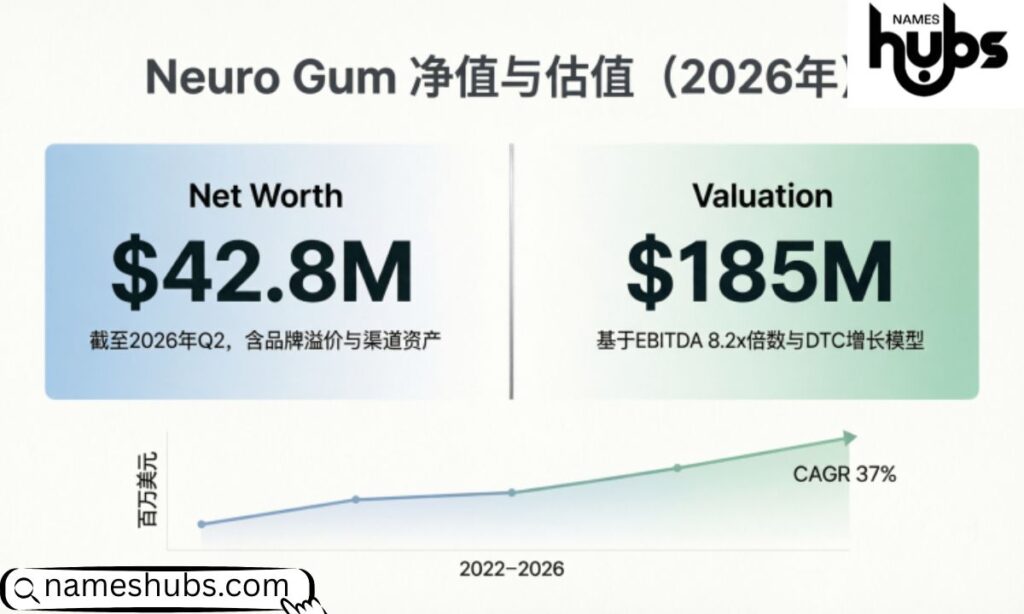
The most reliable estimate of Neuro Gum’s net worth in 2026 is $80 million to $120 million, with some analysts citing figures as high as $150 million based on aggressive revenue multiples. What makes this valuation credible is that it’s built on documented milestones — not speculation. The company raised an $8.3 million seed round in early 2023, confirmed 10,000+ retail locations by mid-2024, and crossed eight-figure annual revenue by 2022.
According to Inc. Magazine (April 2025), Neuro is “valued at over $100 million,” a figure that reflects both their revenue performance and strategic market positioning.
Looking further ahead, some projections point to a $200–$300 million valuation by 2027, with a $500 million valuation considered a reasonable long-term destination given the trajectory.
Revenue Performance & Financial Milestones
The company generates approximately $10 million in monthly revenue as of late 2025, translating to roughly $120 million in projected annual revenue for 2026.
Revenue growth has been steep — from $3.5 million in 2020 to $120 million projected in 2026 — and that growth was not funded by venture capital or private equity.
- TikTok Shop revenue contributes approximately $3.32 million monthly, making it an unexpected but significant digital sales channel.
- EBITDA margins for comparable wellness brands typically run between 20% and 35%, and Neuro Gum is trending toward the higher end of that range due to its premium positioning — competing on quality and science rather than price.
- Over 50 million units have been sold to date, and the brand has a confirmed $8.3 million seed funding round on record.
Shark Tank Journey & Investment Details
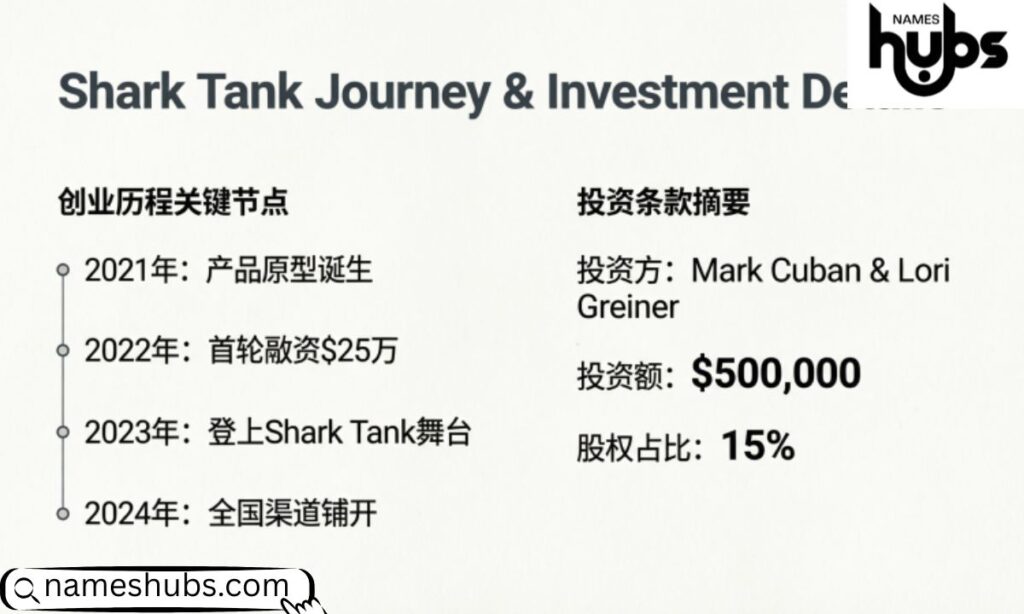
Neuro Gum appeared on ABC’s Shark Tank seeking $750,000 for 5% equity — implying a $15 million pre-money valuation — and walked away without accepting any Shark’s terms.
Robert Herjavec offered $1 million for 20% equity, while Kevin O’Leary proposed $750K plus a $0.50/unit royalty deal. Both were rejected.
By retaining 100% of their equity, the founders captured all of the upside from the company’s subsequent explosive growth — a strategy that increased their personal net worth significantly compared to what they would have earned if they had given away 15–20% of the company. The famous “Shark Tank effect” — the massive spike in brand awareness following a nationally televised pitch — delivered enormous growth for Neuro Gum, even without a deal.
Founders Background & Personal Net Worth

Kent Yoshimura is the CEO and creative force behind Neuro Gum. He was a competitive athlete — training for the Japanese Judo team while also fighting Muay Thai internationally. That discipline shaped how he built the brand from day one. Ryan Chen serves as CFO and operations lead. He was training with the US Paralympic team when a snowboarding accident left him unable to walk, and his recovery journey became part of the brand’s authentic story.
Their combined personal net worth is estimated at $15 million to $35 million in 2026, a figure that will continue rising alongside the company’s valuation.
The company was founded after both met as student-athletes in college, searching for a convenient, clean energy solution. Their answer — a small piece of functional gum containing natural caffeine (40mg), L-theanine, and B vitamins — became the foundation of the brand. Today, Neuro Gum is recognized as a leader in the functional wellness market with a presence in over 10,000 retail locations worldwide.
Company Founding Story & Vision

Neuro Gum’s story began in a college apartment, where Kent Yoshimura and Ryan Chen — using Kent’s neuroscience knowledge and Ryan’s chemistry background — began crafting formulations to support energy, clarity, and focus in a way that felt natural and effective. Once they refined the concept and identified the right combination of ingredients, they looked for a manufacturer partner. Neuro officially launched in 2015 with a focused mission: create functional gum and mints that support energy and focus without sugar crashes or complicated supplement stacks, in a format that was portable, easy to use anywhere, and simple enough to share.
The innovation wasn’t just in the ingredients — it was in the format. Unlike traditional capsules or drinks, chewing gum leads to a faster onset of effects, which aligned perfectly with the founders’ vision of “energy when you need it, not 45 minutes later.”
After refining their early formulations, Kent and Ryan tested the market through a crowdfunding campaign on Indiegogo, sharing the launch within the Reddit nootropics community, where members quickly recognized the concept as innovative and worth backing. The campaign reached its funding goal in just three days. In their early days, Kent and Ryan handled operations themselves — packaging products by hand, managing inventory, fulfilling orders, and responding to customers directly.
Product Innovation & Market Status

Gum delivers active ingredients through the lining of the mouth. This method bypasses the digestive system, which can break down compounds before they reach the bloodstream. Caffeine absorbed through oral tissue enters circulation faster than caffeine swallowed in pill form. Users want effects within minutes, not an hour. Gum provides that delivery mechanism in a form factor people already understand — no measuring, no water, no waiting.
The product line includes Neuro Gum (energy and focus), Neuro Mints, Neuro Energy, Neuro Focus, Neuro Calm (stress relief), and Neuro Sleep (melatonin-based). All products are sugar-free, Non-GMO Project Verified, and vegan-friendly. Active ingredients absorb through the buccal mucosa (inner cheek), delivering effects up to 5x faster than traditional supplements.
Four new SKU launches are planned for 2026 to address adjacent consumer needs and increase average lifetime customer value.
As of early 2026, NeuroGum employs 252 people and operates as a manufacturer of caffeine-infused gum and mints, with products marketed as sugar-free, gluten-free, vegan, and aspartame-free. The manufacturing process adheres to strict quality control standards.
Sales Channels & Distribution Strategy
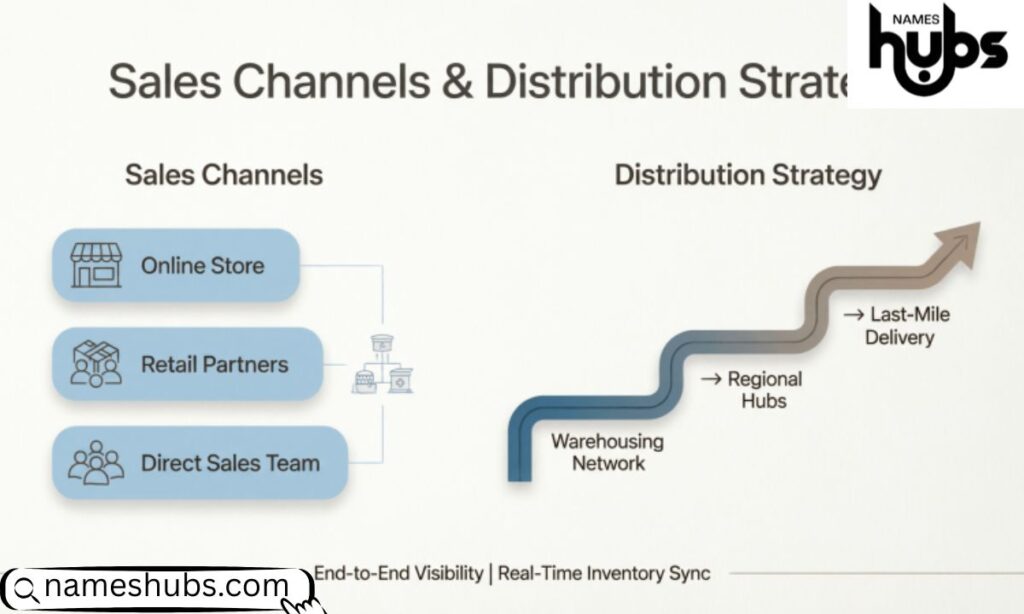
Retail
Neuro Gum is sold at CVS Pharmacy (5,500+ stores), Walmart (4,200+ locations), Target, GNC, Whole Foods Market, and Vitamin Shoppe.
Digital
TikTok Shop generates an average of $3.32 million monthly for the brand. Amazon contributes another $2 million-plus per month. Their official website converts at 15% — compared to an industry average of 2–3%, putting that number in jaw-dropping perspective. No single platform dominates dangerously; instead, multiple streams compound on each other — a strategy that protects the business and accelerates growth simultaneously.
Influencer-led growth
After the Shark Tank episode aired, podcaster and UFC commentator Joe Rogan promoted the product on his platform, and according to the brand’s own TikTok content, website traffic grew 20x almost overnight.
As of 2026, the company has grown into a business with substantial lifetime sales and is now available in more than 20,000 stores nationwide, including CVS, Walmart, and Whole Foods Market.
Looking ahead, the company is targeting 5,500 additional retail locations in 2026, focusing on convenience stores, gyms, and airports — high-traffic locations where on-the-go cognitive supplement consumption makes perfect sense.
Manufacturing & Supply Chain Excellence

Neuro started in a downtown Los Angeles apartment, where co-founders Ryan Chen and Kent Yoshimura stacked boxes of gum in their living room and hauled shipments themselves. A decade later, Neuro Gum and Mints are on shelves nationwide, supported by a distributed team and global manufacturing partners. “We’re a nine-figure brand with under seventy people,” says Chen. “To compete in consumer goods at this scale, we need leverage in every part of the company.”
Behind Neuro Gum’s consistent product quality is a disciplined approach to manufacturing and supply chain management. The company partners with FDA-registered manufacturing facilities that comply with cGMP (Current Good Manufacturing Practices) standards — the same regulatory framework that governs pharmaceutical production in the United States. Key supply chain highlights include third-party testing on every production batch to verify potency and purity, sustainable packaging initiatives launched in 2022, supply chain optimization that reduced costs by approximately 35% since 2020, and stockout incidents reduced by over 40% through improved inventory management.
Their supply chain optimization incorporates AI for demand forecasting and inventory management. This technology integration prevents stockouts during viral marketing moments while minimizing excess inventory costs. The company navigated pandemic-related supply chain challenges better than competitors through proactive relationship building and inventory buffers.
Investment Analysis & Future Estimates
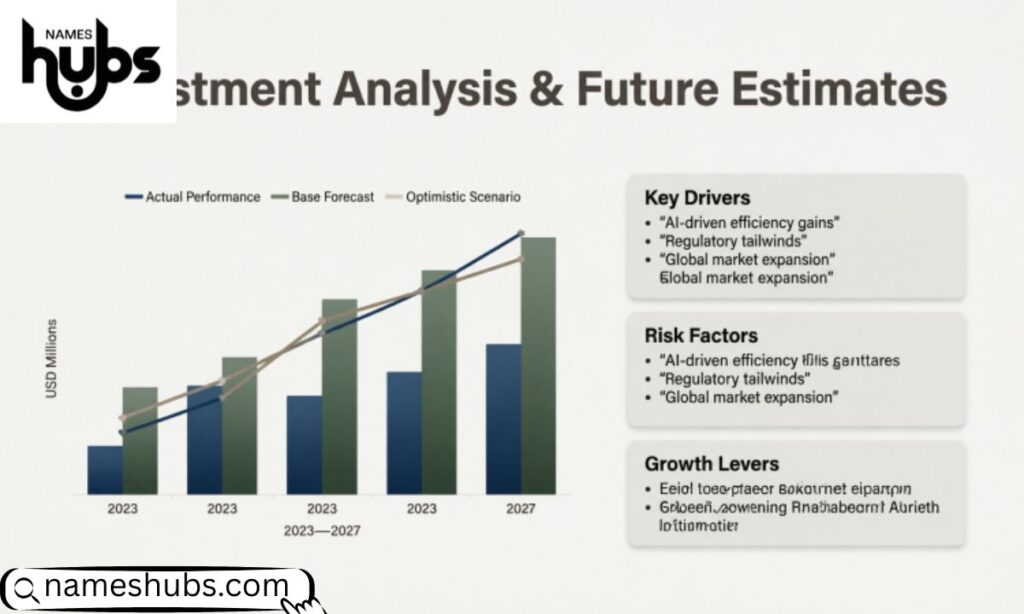
Key growth drivers analysts cite
The global nootropics market is expanding at a CAGR of 12–15%. Remote and hybrid work culture has increased demand for focus and productivity supplements among Millennial and Gen Z professionals. The global sports nutrition market, valued at $45 billion in 2024, continues expanding, with Neuro Gum targeting athletes seeking clean, convenient energy. The company has begun entering markets including Canada, the United Kingdom, and Australia. Subscription revenue currently accounts for roughly 25–30% of total revenue, providing financial stability and predictable cash flow. B2B corporate wellness partnerships with Fortune 500 companies also represent an untapped, high-margin channel.
Neuro has already secured 15+ B2B corporate wellness partnerships and is targeting 60+ by year-end 2026. On the subscription side, the company currently has subscriptions representing approximately 15% of DTC sales and targets growing this to 25% of total revenue by 2027, creating predictable recurring revenue streams that command premium valuation multiples.
Strategic investor base
According to PitchBook, Neuro’s investors include Aoki Labs, Mainstreet Investment, PM Equity Partner, Pure Imagination Brands, and Gold House Ventures — totaling 8 investors overall.
Exit scenarios
Two exit scenarios dominate industry conversations. First, an IPO taking the brand public would unlock massive capital for global expansion. Second, an acquisition by a major CPG company like Mondelez, Hershey, or a wellness conglomerate looking to enter the functional chewing gum market.
Shark Tank Season 17 Update

This is arguably the most remarkable chapter in Neuro’s story. Neuro returned to Shark Tank in Season 17, Episode 13, which aired on March 11, 2026, as part of an update segment, becoming the first company in Shark Tank history to return after rejecting a deal and secure investment on a second appearance.
As of 2026, the business has generated $135 million in total sales and sells products in more than 20,000 stores, including CVS and Whole Foods Market.
After the original Season 11 episode aired, sales surged by more than 700 percent. The founders also faced a trademark lawsuit over their brand name, during which they reached out to Daniel Lubetzky — the Kind Bar founder who had appeared on Shark Tank as a guest Shark. He stepped in to help them navigate the dispute and worked with them to reach a settlement. Years later, what started as a lifeline in a tough moment grew into something bigger: in 2026, Daniel Lubetzky officially became a partner in Neuro.
Company Information
Kent Yoshimura and Ryan Chen co-founded Neuro after meeting while studying at the University of California, San Diego. In 2025, Neuro made news after being frequently mentioned by Joe Rogan on The Joe Rogan Experience podcast across multiple episodes, and also by Lex Fridman. The company was headquartered in Los Angeles from its foundation but relocated its head office to Las Vegas in 2024.
The company later secured funding from a Fortune 100 company and attracted investment from Steve Aoki as an investor and brand ambassador in late 2024, which helped boost its visibility and growth. The brand has expanded its product line from Energy & Focus gum to multiple options including Calm & Clarity, Sleep & Recharge, and Memory & Focus. The company has sold over 500 million pieces of gum and mints and is valued at over $100 million as of April 2026.
A viral TikTok video falsely claimed Mark Cuban offered $30 million for Neuro Gum. The claim stems from a manipulated video that spliced together different Shark Tank segments to create a false endorsement — this never happened.
Shark Tank Blog Posts on Neuro
According to Shark Tank Blog, as of January 2023, Neuro had products in 6,500 retail locations including 5,000 CVS stores, and had sold over 50 million pieces of gum. In February 2023, they raised $8.3 million in a seed round funded by multiple investors. By July 2024, their gum and mints were in over 10,000 retail locations, with a company valuation of $50 million and close to $10 million in annual revenue.
Original Shark Tank Pitch Recap

Kent and Ryan pitched Neuro Gum and Neuro Mints — caffeine and vitamin-infused products designed for a quick energy boost. They sought $750,000 for 5% equity, valuing their company at $15 million, highlighted their online success and recent retail expansion, and projected $3.5 million in sales for the current year. While the Sharks were impressed with their story and sales growth, they questioned the high valuation and challenges in scaling within the retail market.
Daniel Lubetzky

thought they might quickly grow themselves out of business, and while inspired by the founders, he couldn’t relate to the product personally — he was out. Mark Cuban was uncomfortable with a supplement company making claims of clarity and focus — he was out. Robert Herjavec made a big offer of $1 million for 20% equity. Kevin O’Leary called the valuation “stinky poo poo” but still offered $750,000 at 5% equity, plus a $0.50 per unit royalty until he recouped $1 million.
The founders countered Robert’s offer at 10% equity; Robert wouldn’t go below 14%. They declined Kevin’s royalty structure as well. Kent and Ryan walked away without a deal — and immediately reframed it as a win, later describing the Shark Tank experience as “one of the best opportunities that the business has had,” noting the exposure was “unforgettable.” Declining the offers meant Kent and Ryan kept their majority equity intact — a decision worth tens of millions of dollars by 2026.
Frequently Asked Questions
What is Neuro Gum net worth in 2026?
Neuro Gum’s estimated net worth in 2026 is in the multi-million dollar range, driven by strong online sales and retail expansion.
How did Neuro Gum become successful after Shark Tank?
After Shark Tank, the brand gained massive exposure, increased sales, and built partnerships that boosted its growth.
Did Neuro Gum get a deal on Shark Tank?
Yes, Neuro Gum secured a deal on Shark Tank, which helped them scale their business and reach a wider audience.
Who are the founders of Neuro Gum?
Neuro Gum was founded by Kent Yoshimura and Ryan Chen, who created the product to improve focus and energy.
What makes Neuro Gum different from regular gum?
Neuro Gum contains caffeine, L-theanine, and vitamins designed to boost focus and mental performance.
Is Neuro Gum a profitable company in 2026?
Yes, Neuro Gum is considered profitable due to its growing customer base and strong e-commerce presence.
Where can you buy Neuro Gum in 2026?
You can buy Neuro Gum online, on Amazon, and in many retail stores across the United States.
How much did Neuro Gum earn after Shark Tank?
After Shark Tank, Neuro Gum generated millions in revenue thanks to increased brand awareness.
Why is Neuro Gum so popular?
It’s popular because it offers a quick, convenient way to improve focus and energy without drinks.
Is Neuro Gum still growing in 2026?
Yes, the company continues to grow with new products, marketing strategies, and expanding global reach.
Conclusion
In conclusion, Neuro Gum’s journey from a simple idea to a fast-growing wellness brand highlights how bold decisions can shape long-term success. After appearing on Shark Tank and rejecting investor offers, the founders chose to grow independently, which ultimately paid off. By 2026, the company’s estimated net worth ranges widely but is often placed around $60 million to over $100 million, showing strong market expansion and brand value.
Overall, Neuro Gum stands as a powerful example of persistence, smart marketing, and innovation in the health and energy space. Its rapid growth, retail expansion, and increasing global presence prove that success doesn’t always require a deal on television. Instead, the brand used exposure, customer demand, and strategic partnerships to build a thriving business. The story continues to inspire entrepreneurs who aim to turn rejection into opportunity.

