
Flowers make nature look beautiful and colorful. In Karnataka, many people like to learn flower names in Kannada for school, daily life, and language learning. This guide will help you learn 110 flower names in Kannada with easy meanings and pictures. It is simple to read and useful for kids and adults.
Learning flower names in Kannada can also improve your vocabulary. You can understand local names and use them in daily conversations. This list includes common and beautiful flowers with meanings to make learning fun and easy. It is a helpful guide for anyone who loves flowers and language learning.
Why Learn Flower Names in Kannada?
Karnataka has a rich tradition of floral culture — from temple rituals to garland weaving and classical literature. Learning flower names in Kannada connects you to this heritage and makes everyday conversations more meaningful.
- Deepen your understanding of Kannada poetry, songs, and folk literature, which are filled with floral symbolism.
- Communicate confidently at local markets, nurseries, and festivals where Kannada names are used exclusively.
- Appreciate Karnataka’s biodiversity — many native flowers have no direct translation and carry unique cultural meaning.
- Strengthen your overall Kannada vocabulary through memorable, everyday words rooted in nature.
- Connect with rural communities and traditions where flowers play a central role in daily life and worship.
Complete List of Flowers in Kannada (With English & Scientific Names)
| English Name | Kannada Name | Scientific Name |
| Jasmine | ಮಲ್ಲಿಗೆ (Mallige) | Jasminum sambac |
| Lotus | ತಾವರೆ (Taavare) | Nelumbo nucifera |
| Rose | ಗುಲಾಬಿ (Gulaabi) | Rosa |
| Marigold | ಚೆಂಡು ಹೂವು (Chendu Hoovu) | Tagetes erecta |
| Hibiscus | ದಾಸವಾಳ (Dasavala) | Hibiscus rosa-sinensis |
| Chrysanthemum | ಶೇವಂತಿಗೆ (Sevanthige) | Chrysanthemum indicum |
| Tuberose | ಸುಗಂಧರಾಜ (Sugandha Raja) | Polianthes tuberosa |
| Crossandra | ಕನಕಾಂಬರ (Kanakambaram) | Crossandra infundibuliformis |
| Sunflower | ಸೂರ್ಯಕಾಂತಿ (Sooryakanthi) | Helianthus annuus |
| Oleander | ಕಣಗಿಲೆ (Kanagile) | Nerium oleander |
| Frangipani | ದೇವಗಣಿಗಿಲೆ (Devagile) | Plumeria rubra |
| Bougainvillea | ಕಾಗದ ಹೂ (Kaagada Hoo) | Bougainvillea spectabilis |
| Peacock Flower | ರಾಜಮಲ್ಲಿಗೆ (Raja Malige) | Caesalpinia pulcherrima |
| Night-blooming Jasmine | ಪಾರಿಜಾತ (Paarijata) | Nyctanthes arbor-tristis |
| Banana Flower | ಬಾಳೆ ಹೂವು (Baale Hooyu) | Musa |
Seasonal Flowers of Karnataka
Summer
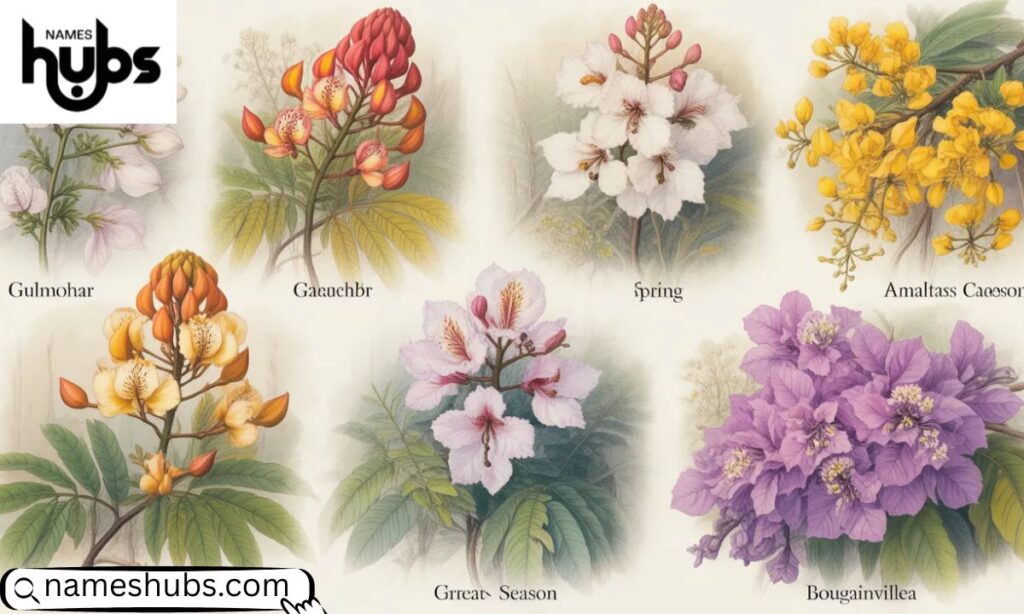
Bougainvillea (ಕಾಗದ ಹೂ), Oleander (ಕಣಗಿಲೆ), and Frangipani (ದೇವಗಿಲೆ) burst into vivid color across roadsides and gardens. Jasmine (ಮಲ್ಲಿಗೆ) reaches peak fragrance during this hot season, making it the busiest time for garland sellers.
Monsoon
The rains bring forth Crossandra (ಕನಕಾಂಬರ) and Hibiscus (ದಾಸವಾಳ) in full bloom. Lotus (ತಾವರೆ) thrives in the filling ponds and temple tanks of the region during this lush period.
Winter
Marigold (ಚೆಂಡು ಹೂವು) and Chrysanthemum (ಶೇವಂತಿಗೆ) dominate Karnataka’s flower markets in winter. Tuberose (ಸುಗಂಧರಾಜ) and Sunflower (ಸೂರ್ಯಕಾಂತಿ) also flourish, coinciding with major festival seasons.
Popular Flowers in Karnataka Festivals & Traditions
Dasara
Marigold (ಚೆಂಡು ಹೂವು) and Chrysanthemum (ಶೇವಂತಿಗೆ) garlands decorate the grand Mysuru Dasara procession. The palace, idols, and elephants are adorned with tonnes of fresh flowers, making this Karnataka’s most floral celebration.
Ugadi
Jasmine (ಮಲ್ಲಿಗೆ) and Crossandra (ಕನಕಾಂಬರ) are woven into traditional hair garlands (gajra) worn by women to welcome the new year. Doorsteps are decorated with fresh flower rangoli.
Temple Worship
Lotus (ತಾವರೆ), Hibiscus (ದಾಸವಾಳ), and Night-blooming Jasmine (ಪಾರಿಜಾತ) are among the most sacred offerings. Paarijata is particularly revered as it is believed to be of divine origin in Hindu tradition.
Weddings & Auspicious Events
Tuberose (ಸುಗಂಧರಾಜ) and Rose (ಗುಲಾಬಿ) are central to bridal decoration and mandap arrangements. Jasmine remains the most beloved flower for brides’ hair across all communities in Karnataka.
Medicinal & Ayurvedic Uses of Flowers
Phoolon ka rishta sirf khubsurati se nahi, balki sehat se bhi bahut gehra hai. Karnataka ki dharti par ugne wale kai phool sadiyon se Ayurvedic ilaj mein kaam aate rahe hain, aur aaj bhi gaon ke bade-buzurg in phoolon ka istemal apni rozmarra ki zindagi mein karte hain.
Jasmine, jise Kannada mein “Mallige” kehte hain, sirf khushbu ke liye nahi balki sar dard aur tanav mitane ke liye bhi jaana jaata hai. Iske phoolon ka tail sar par lagane se neend acchi aati hai aur dimag shant rehta hai. Isi tarah Hibiscus, yaani “Dasavala,” baalon ke liye ek praakriti ka tohfa hai. Iske phoolon ko paani mein ubaalkar pina blood pressure ke liye faydemand maana jaata hai, aur iska paste baalon mein lagane se woh ghane aur chamakdar bante hain.
Lotus, jo Karnataka ke kaafi taalabon mein khilta hai, Ayurveda mein ek poojniya aushdhiya phool hai. Iske beej, jad, aur phool teeno alag-alag bimariyon mein kaam aate hain. Beejon ka sharbat dil ko thandak deta hai, jabki jad ka istemal peth ki problem mein kiya jaata hai.
Marigold, yaani “Chendu Hoovu,” sirf mandaron mein nahi bikta — iska istemal chamdi ki takleefo aur aankhon ki sujan ke liye bhi hota hai. Gaon ki dadiyan aaj bhi gehende ke phoolon ko paani mein bhigo kar woh paani aankhon par lagate hain.
Aloe vera ke saath milaakar Neem ke phoolon ka paste dant dard mein kaam aata hai. Yeh choti-choti batein hain jo humne apni daadi-naaniyon se suni hain, lekin inke peeche hazaron saal ki Ayurvedic samajh chupi hui hai.
Karnataka ki yeh phool-dhan virasat sirf kheton aur bageeche tak seemit nahi — yeh ek jeeta-jaagta ilm hai jo peedhi dar peedhi aage badhta raha hai.
Gardening with Native Kannada Flowers
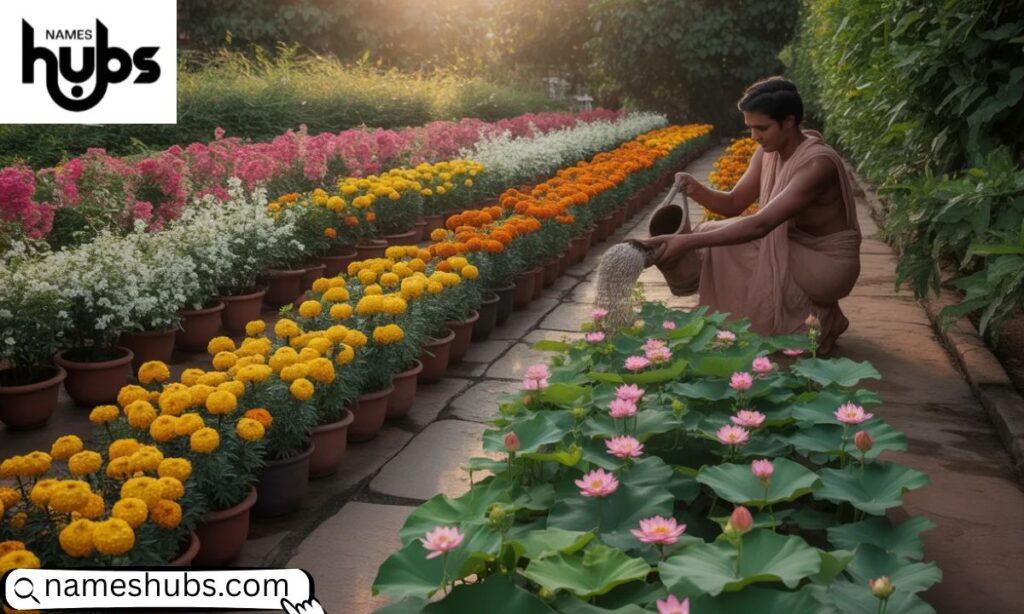
Agar aap apne ghar ke aanganon ya chhat par ek chhota sa baagaan banana chahte hain, toh Karnataka ke desi phoolon se behtar shuruwat kya hogi? Yeh phool is mitti mein paida hue hain, is mausam ko samajhte hain, aur inhe zyada dekh-rekh ki bhi zaroorat nahi padti.
Shuru karte hain Mallige se — Jasmine ki kism ko Kannadigas ghar ke bahar lagaate hain taaki subah ki hawa khushbu se bhar jaaye. Ise zyada paani nahi chahiye, bas achhi dhoop aur kuch mehnat. Ek baar lag jaaye toh har saal khilta hai aur ghar ko ek alag pehchaan deta hai.
Crossandra, jise “Kanakambara” kehte hain, ek aur sundar desi phool hai jo shade mein bhi khil sakta hai. Yeh un logon ke liye perfect hai jinke ghar ka baagaan zyada dhoop nahi paata. Iske narangi aur laale rang ke phool teen-teen mahinon tak tikke rehte hain.
Rangoon Creeper, yaani “Madhumalati,” ek bel hai jo deewar ya jangla pakad kar upar chadhti hai. Jab yeh khilti hai toh phool pehle safed, phir gulaabi, phir laale ho jaate hain — ek hi bel par teen rang! Yeh ek aisa phool hai jo baagaan ko drama aur romance deta hai.
Shami aur Parijat bhi Karnataka ke ghar-aanganon ki shaan hain. Parijat ke phool raat ko khilte hain aur subah teri roshni mein jhadte hain — is manzar ko ek baar dekhne ke baad bhulna mushkil hai.
Gardening sirf ek hobby nahi, ek shukriyada hai apni dharti ko. Jab aap desi phool lagate hain toh sirf baagaan nahi sajaate — titliyan laate hain, bhavre bulate hain, aur apni jadon se ek rishtaa jodte hain.
Flower Tourism in Karnataka
Karnataka ek aisa raaj hai jahan phoolon ki koi kami nahi — na maidan mein, na pahaad par, aur na hi mandir ke darwaze par. Flower tourism ek aisa safar hai jo aapko is raaj ke un koshon mein le jaata hai jo sirf phoolon ki wajah se zinda hain.
Coorg, yaani Kodagu, Maharashtra ke taalon jaisi barish ki wajah se ek alag hi duniya hai. Yahan ke chai aur kaafi ke bageeche phoolon se bhar jaate hain, khaaskar October se February ke beech. Ek subah Coorg ke kisi dhaan ke khet ke paas khade hokar dhund mein Chrysanthemums dekhna — yeh anubhav sirf shaabd mein nahi aata.
Dakshin Kannada aur Udupi ke coastal areas mein coconut trees ke neeche wild orchids aur jungle flowers milte hain jo tourists ko hairaan kar dete hain. Yahan ke log phoolon ko ek roozi ka zariya bhi samajhte hain — Jasmine aur Marigold ke haar banaake woh haftewaar bazaaron mein bechte hain.
Bandipur aur Nagarhole ke jungle mein agar aap jungle safari par jaayein, toh raaste mein kaafi wild flowers nazar aayenge. Flame of the Forest — jise “Muttuga” kehte hain — jab khilta hai toh poora jangal laal ho jaata hai. Yeh nazara March-April mein dekhne layak hota hai.
Hampi ke ruins ke beech jo wild flowers ugti hain, woh ek alag hi kahaani kehti hain. Poranon ki neevon ke saath-saath Bougainvillea aur wild jasmine ka milna ek ajeeb aur khoobsurat contrast banata hai.
Agar aap seriously flower tourism explore karna chahte hain, toh Udupi ka annual Flower Show aur Mysuru ke brindavan gardens ki seasonal gardening events zaroor check karein. Yeh jagahein sirf dekhne ki nahi, mehsoos karne ki hain.
Photography Tips for Karnataka’s Flowers
Ek acchi phool ki photo sirf camera se nahi, aankhon se khichi jaati hai. Jab aap Karnataka ke kisi baagaan ya jungle mein khade hote hain aur ek khubsoorat phool saamne hota hai, toh bas click karne se pehle kuch cheezein sochna zaroori hai.
Sabse pehli baat — roshni. Subah ki pehli dhoop, jise “Golden Hour” kehte hain, phoolon par ek aisi chamak deti hai jo dopahar ki kadakti dhoop kabhi nahi de sakti. Agar aap Jasmine ya Lotus ki photo lena chahte hain toh subah 6 se 8 baje ka waqt sone ka hai. Yeh waqt na sirf roshni ke liye, balki is liye bhi acha hai kyunki is waqt phool taaza khile hote hain aur unpar ose ki boondein bhi hoti hain.
Doosri baat — angle. Zyada log phool ke upar se photo lete hain, jo ek common galti hai. Ek baar phool ki seedh mein neeche aa jaiye aur uski aankhon se duniya dekhiye. Is angle par background blur hoti hai, phool ka center sharp aata hai, aur poori photo mein ek alag depth aa jaati hai.
Teesri baat — background. Ek sundar phool bhi bekar lag sakta hai agar peeche koi parking lot ya kachra dikhta ho. Apna aap thoda hilaiye, aur ek saaf, simple background dhundhiye — neela aasman, haari pattiyaan, ya dhuaan bhari dhund. Yeh phool ko sach mein hero banata hai.
Karnataka mein Kanakambara, Parijat, aur wild Orchids kuch aisi cheezein hain jo aapke lens ke nazar se guzarni chahiye. Coorg ki dhund mein Chrysanthemums aur Hampi ke ruins mein Bougainvillea — yeh ek photographer ka sapna hain.
Akhir mein, sabse zaroori tip — patience. Phool hilta hai, pattiyan aankhon ke saamne aati hain, ek titli aa ke baith jaati hai. Wait karo. Woh perfect moment aata zaroor hai — aur tab jo photo milti hai woh sirf ek photo nahi, ek kahani hoti hai.
Flower-Based Industries in Karnataka
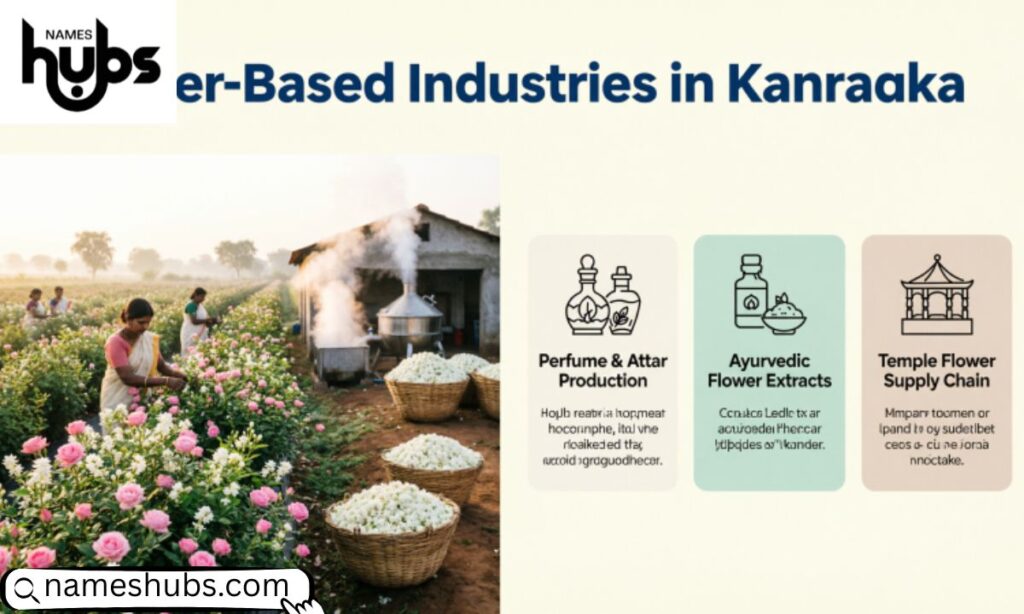
Karnataka ranks among India’s most prominent flower-producing states, with its fertile soils and favourable climate supporting a vast commercial floriculture sector. Districts such as Bengaluru Rural, Kolar, and Belagavi are known for large-scale cultivation of roses, jasmine, marigolds, and chrysanthemums. These flowers supply not only domestic markets but are also exported to countries across Europe, the Middle East, and Southeast Asia, generating considerable foreign exchange for the state.
The cut flower industry has transformed rural livelihoods in several parts of Karnataka, bringing steady income to thousands of farming families. Greenhouse technology and modern irrigation methods have enabled growers to maintain quality and yield throughout the year, regardless of seasonal variation. Government schemes and horticultural cooperatives have further strengthened the supply chain, connecting small farmers directly to urban wholesale markets and export hubs.
Beyond cultivation, Karnataka hosts a thriving network of flower-related enterprises, including garland-making units, essential oil extraction facilities, and fragrance manufacturing businesses. The jasmine and rose oil produced in parts of the state find their way into premium perfumery and cosmetics globally. This downstream value addition has helped elevate floriculture from a simple agricultural activity into a multi-crore industry with growing employment potential.
Future of Karnataka’s Floral Diversity
Karnataka’s extraordinary range of ecosystems — from the humid Western Ghats to the dry Deccan plateau — sustains an exceptional variety of flowering plants. However, rapid urbanisation, habitat loss, and climate change are increasingly threatening this natural heritage.
Botanists and conservationists warn that without decisive intervention, many endemic and rare species could disappear before they are even fully catalogued by science.
Efforts to safeguard floral diversity are gaining momentum through a combination of protected area management, community-led conservation, and botanical garden initiatives.
Institutions such as the University of Agricultural Sciences and the Jawaharlal Nehru Tropical Botanic Garden maintain living collections of threatened species and conduct seed banking programmes.
Local communities in forested regions are also being engaged as stewards of the land, recognising their traditional ecological knowledge as a vital resource for conservation.
The future of Karnataka’s floral richness will depend heavily on the integration of biodiversity goals into development planning. Eco-sensitive zoning, sustainable tourism models, and agro-ecological farming practices all offer pathways to preserving the state’s botanical wealth while supporting human prosperity.
With the right policy framework and public awareness, Karnataka has the potential to serve as a model for floral conservation across peninsular India.
Wildflowers of the Western Ghats
The Western Ghats, stretching along Karnataka’s western edge, are recognised as one of the world’s biodiversity hotspots, sheltering an astonishing array of wildflowers found nowhere else on earth. Species such as Impatiens (touch-me-nots), wild orchids, Strobilanthes kunthiana — the famed Neelakurinji — and countless members of the legume and daisy families bloom across these mist-laden hills.
Every monsoon season transforms the landscape into a vivid tapestry of colour, drawing botanists and nature enthusiasts from across the country.
Many Western Ghats wildflowers have developed extraordinary adaptations to thrive in their environment.
Some species rely on highly specific pollinators, including endemic bees and butterflies, forming intricate ecological relationships that have evolved over millions of years. Others, like the Neelakurinji, follow a mass-flowering cycle that occurs only once in twelve years, creating spectacular seasonal phenomena that have deep cultural significance for local Kodava and Soliga communities.
Despite their ecological importance, Western Ghats wildflowers face serious pressure from invasive species, illegal collection, and the encroachment of monoculture plantations into forest margins. Conservation organisations are working alongside the Forest Department to monitor threatened populations and restore degraded habitats with native plant species.
Citizen science initiatives have also proved valuable, with trained volunteers documenting flower sightings through digital platforms and contributing to a growing database of distribution records.
Sacred Flowers in Temples and Rituals
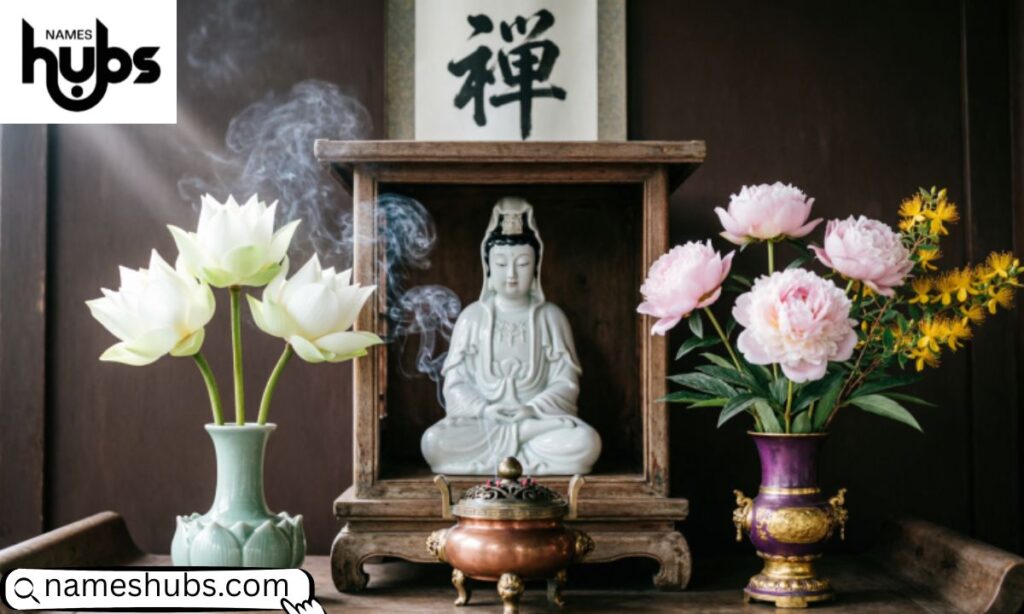
Flowers hold a place of profound spiritual significance in Karnataka’s religious life, woven into daily acts of worship, seasonal festivals, and major ceremonies. At virtually every temple across the state, fresh offerings of jasmine, marigold, lotus, and champak are prepared with meticulous care each morning.
These flowers are believed to carry the devotee’s prayers upward to the divine, and their fragrance is considered a form of sacred language understood by the gods.
Different flowers are associated with specific deities and carry distinct symbolic meanings within the region’s religious traditions.
The lotus, rising immaculate from muddy water, is revered as a symbol of spiritual purity and is closely linked to goddesses Lakshmi and Saraswati. Jasmine — known locally as mallige — holds a particularly cherished status and is offered to Lord Shiva, while the marigold’s vivid saffron hue connects it to auspiciousness and is used liberally during weddings and festive processions.
The ritual use of flowers also sustains a dedicated community of artisans and vendors whose livelihoods revolve around the temple economy. Women in many towns spend the early hours of each morning crafting elaborate garlands, floral rangolis, and decorative torans that adorn temple entrances and household prayer rooms.
During major festivals such as Dasara, Ugadi, and Varamahalakshmi, the demand for auspicious flowers surges dramatically, giving a seasonal boost to the local floriculture trade and reinforcing the living bond between Karnataka’s natural abundance and its spiritual culture.
Kannada Flowers in Ayurveda and Modern Medicine
Karnataka has always had a deep relationship with flowers — not just for beauty or worship, but for healing. Long before modern hospitals and pharmacies existed, people in this region turned to flowers growing in their own backyards and forests as medicine. That tradition is rooted in Ayurveda, one of the world’s oldest systems of natural healing, and it is still very much alive today.
Take the jasmine flower, known locally as mallige. It has been used for centuries to calm the mind and ease headaches. A few jasmine petals steeped in warm oil were a grandmother’s remedy for stress and sleeplessness, and modern science has now begun to confirm what those grandmothers already knew — jasmine contains compounds that have a mild sedative effect on the nervous system.
Similarly, hibiscus, or dasavala, has long been valued in Ayurveda for cooling the body and supporting healthy blood pressure. Today, hibiscus tea is sold worldwide as a health drink, and clinical studies support its role in managing hypertension.
The lotus holds a special place in both Kannada culture and traditional medicine. Every part of the plant — flower, leaf, stem, and seed — has a use in Ayurvedic treatment. It is prescribed for skin conditions, digestive problems, and even emotional disturbances. The chrysanthemum, meanwhile, has been used in eye-care preparations for generations, and this has attracted the attention of researchers studying natural anti-inflammatory compounds.
What makes Karnataka particularly important in this context is biodiversity. The Western Ghats, which run through the state, are home to thousands of flowering plant species. Many of these are still being studied by scientists looking for new medicines. Pharmaceutical companies and Ayurvedic manufacturers alike source raw flower materials from Karnataka farmers, making this ancient tradition a very present-day industry. The connection between a flower blooming in a Karnataka field and a tablet on a pharmacy shelf is closer than most people realize.
Flower Exports and Global Reach of Karnataka Floriculture Industry
Karnataka is one of India’s leading states when it comes to growing and exporting flowers commercially. The industry has grown enormously over the past two decades, moving from small local trades to organized export businesses that ship fresh flowers to countries across Europe, the Middle East, Japan, and the United States.
The Bengaluru region, particularly areas like Hesaraghatta and Doddaballapur, has developed into a hub for greenhouse floriculture. Farmers here grow Dutch roses, gerberas, carnations, and lilies under controlled conditions, harvesting blooms that meet the strict quality standards required by international buyers. These are not the traditional garden varieties — they are precision-grown crops, harvested at exactly the right stage of bloom and packed within hours to preserve freshness during long flights.
Roses are the crown of Karnataka’s export floriculture. The state produces millions of rose stems every year, with peak demand aligning with international events like Valentine’s Day and Mother’s Day in Europe and North America. A single wholesale flower market in Bengaluru can handle lakhs of flower bunches every day during peak seasons.
Traditional flowers like jasmine, marigold, and chrysanthemum are also exported, though often in dried or processed forms — as essential oils, floral extracts, or dried petals — for use in the perfume, cosmetics, and food industries. Karnataka’s marigold, for example, is processed for lutein, a natural pigment used in health supplements and as a natural food colourant.
The Karnataka government has actively encouraged this growth through schemes that support cold storage facilities, better packaging infrastructure, and air cargo arrangements. Organizations like APEDA (Agricultural and Processed Food Products Export Development Authority) have helped connect Karnataka flower farmers with global buyers. Still, farmers face challenges — fluctuating international prices, strict import regulations in destination countries, and the ever-present threat of pest outbreaks. But the industry continues to grow, and many rural farming families in Karnataka now depend on floriculture for their livelihoods.
Urban Gardening Trends in Bengaluru and Mysuru
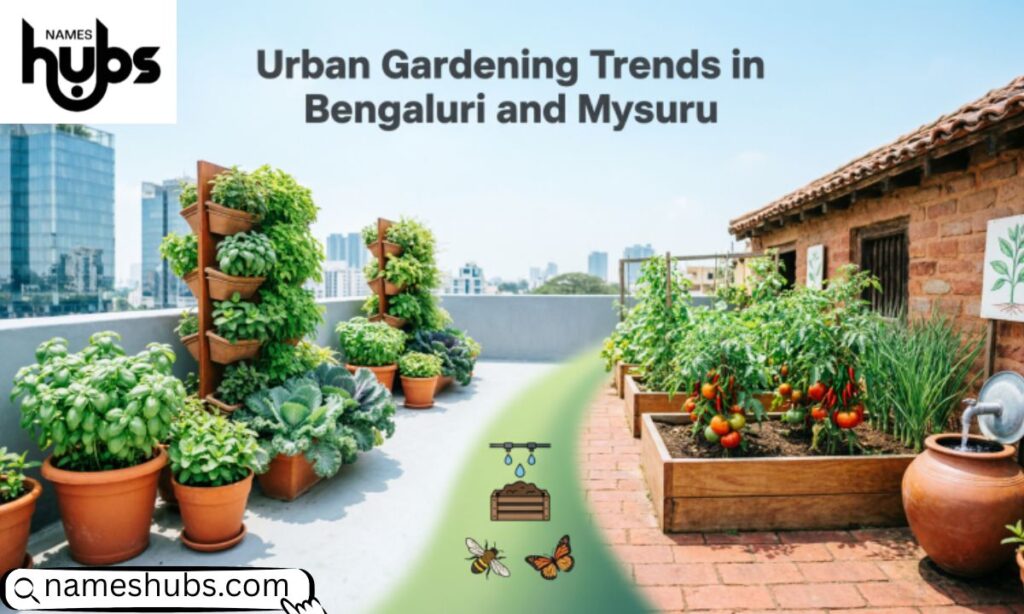
Something interesting is happening on the balconies, rooftops, and small courtyards of Bengaluru and Mysuru. People are growing flowers again — not because they have to, but because they want to. Urban gardening has become one of the most quietly popular movements in both cities, driven by a mix of environmental awareness, mental health needs, and a simple longing to reconnect with nature in the middle of concrete life.
In Bengaluru, where apartment living has become the norm, people are finding creative ways to bring green and colour into tight spaces. Vertical gardens — plants arranged on wall-mounted frames — have become popular in small flats where floor space is limited. Marigolds, petunias, balsam, and impatiens are common choices because they are forgiving for beginners and bloom abundantly with minimal fuss. Community gardens have also emerged in several neighbourhoods, where residents collectively maintain a shared green space, growing both flowers and vegetables.
The jasmine plant, a flower deeply embedded in Karnataka’s cultural identity, has seen a revival in urban balcony gardens. Many residents of Bengaluru trace their love of jasmine back to childhood memories of their grandmother tending to a malleable creeper in the family home. Growing it now, even in a small pot, feels like keeping a thread to that past alive.
Mysuru, with its heritage of royal gardens and the famous Brindavan Gardens nearby, has always had a garden culture. But the newer trend here is less about formal horticultural spaces and more about everyday people turning their homes into green retreats. Social media has played a significant role — gardening groups on platforms like WhatsApp and Instagram have helped urban gardeners in Mysuru share tips, seeds, and cuttings. Local nurseries report a steady rise in the sale of flowering plants, and weekend plant markets have become social events in themselves.
There is also a practical dimension to this trend. Many urban gardeners in both cities have started growing flowers that serve double duty — hibiscus for health teas, marigolds for home puja rituals, and aloe vera alongside their flowering plants for everyday use. Gardening, for many people in these cities, is no longer just a hobby. It has become a form of quiet resistance to the pace and stress of urban life.
Case Study: Mysuru Dasara Flower Show
Every October, when Mysuru prepares for Dasara — one of India’s most celebrated festivals — flowers take centre stage in a way that is hard to find anywhere else in the country. The Mysuru Dasara Flower Show is not simply an exhibition. It is a statement about Karnataka’s horticultural identity, a celebration of craftsmanship, and one of the most visited public events in the state.
The flower show is held at the Mysuru Palace grounds and at Jayalakshmi Vilas, drawing visitors from across Karnataka and beyond. Hundreds of thousands of flowers are used over the course of the event, arranged into elaborate sculptures, arches, and themed displays. Giant peacocks made entirely of marigolds, the Mysore palace recreated in chrysanthemums, portraits of Kannada cultural icons crafted from petals — the scale and skill involved are genuinely extraordinary.
What makes this event remarkable from an industry perspective is the behind-the-scenes coordination it requires. Flower farmers from around Mysuru district, as well as suppliers from as far as Bengaluru and Tamil Nadu, begin preparing weeks in advance. Cold storage logistics, bulk transportation, and the management of freshness across a multi-day event are all serious operational challenges. Local horticulture experts and garden artists work closely with municipal officials to bring the designs to life in time.
The flower show also has a competitive element. Participants from government departments, private organizations, and horticultural societies submit displays that are judged on creativity, use of native species, and overall presentation. This competitive spirit pushes the craft forward each year and encourages the use of less common local flowers alongside the reliable marigold and rose.
For the farmers and vendors who supply the Dasara flower show, it is one of the most profitable weeks of the year. A single large-scale display can require several thousand kilograms of flowers, and prices in the lead-up to Dasara often reflect that demand. Beyond economics, there is also pride involved — the chance to see one’s flowers transformed into art on a public stage watched by millions.
The Mysuru Dasara Flower Show is, in many ways, a mirror of Karnataka’s flower story as a whole: ancient traditions given new expression, everyday farmers connected to something larger, and the simple beauty of a flower placed at the heart of a living culture.
Quotes from Kannada Literature on Flowers
Kannada literature has always held flowers close to its heart, using them as symbols of beauty, devotion, love, and the passing of time. The great poet Kuvempu once wrote with deep tenderness about the jasmine blooming in the village courtyard, likening its fragrance to a mother’s quiet love — present everywhere, noticed only when you pause.
Poets like D.R. Bendre found in flowers a mirror of human longing. He described the Kanigilu flower swaying in the wind as if it were a young girl waiting for someone who may never return. In the Vachana literature of the 12th century, the Sharanas often used flowers as offerings not just to God but to the idea of a pure life.
Basavanna’s vachanas speak of offering a garland not made of petals, but of honest deeds. Akka Mahadevi, one of the most beloved poet-saints, compared her own soul to a flower opening slowly before Lord Shiva — vulnerable, fragrant, and unashamed. These literary voices remind us that in Karnataka’s poetic tradition, a flower is never just a flower. It carries the weight of emotion, faith, and philosophy.
Future Challenges: Climate Change and Loss of Floral Diversity

Karnataka is home to an extraordinary variety of flowering plants, from the misty Western Ghats to the dry Deccan plateau. But this floral richness is quietly under threat. As temperatures rise and rainfall patterns become unpredictable, many wildflowers that once bloomed reliably each season are now appearing late, in smaller numbers, or not at all. The Neelakurinji, famous for its once-in-twelve-years mass blooming in the Shola forests, is already facing habitat loss due to encroaching plantations and changing monsoon patterns.
Pollinators like bees and butterflies, which depend on specific flowers, are also declining, creating a painful cycle where flowers fade because their partners are gone too. In agricultural zones, the shift toward monoculture farming has replaced diverse local flowering plants with single crops, stripping away the wild edges where rare species once survived. Botanists working in the region warn that dozens of endemic flowering species could disappear within this century if forest cover continues to shrink.
The loss is not just ecological — it is cultural and emotional. Communities that have grown festivals, rituals, and recipes around particular flowers will find their traditions hollowed out. Addressing this requires stronger forest protection, community awareness, and a return to mixed, sustainable farming that leaves room for wildflowers to grow.
Role of Flowers in Kannada Literature and Folklore
Flowers have woven themselves so deeply into Kannada culture that it is almost impossible to imagine the literature or folklore without them. In folk songs sung during harvest time or at weddings, flowers serve as messengers between lovers, offerings to deities, and symbols of a girl’s transition into womanhood. The Mallige, or jasmine, is perhaps the most celebrated of all — it appears in countless songs as an image of purity and feminine grace.
In the Yakshagana tradition of coastal Karnataka, performers wear elaborate floral headgear that carries specific symbolic meaning, with each flower chosen deliberately to represent a character’s divine or demonic nature. Stories passed down through generations often feature flowers with magical properties — a lotus that blooms only for the virtuous, or a forest flower that reveals the truth when held by someone with a pure heart.
In household folklore, certain flowers are considered auspicious while others are avoided for rituals, a knowledge system passed quietly from mother to daughter. Classical Kannada poets of the Veerashaiva movement used flower imagery to challenge caste hierarchies — arguing that God cares for the sincerity of devotion, not whether the flower offered is rare or common. In this way, flowers in Kannada literature carry both beauty and rebellion, tenderness and courage.
Flowers in Karnataka’s Culinary Traditions
In Karnataka’s kitchens, flowers are not just decoration — they are ingredients, medicines, and memories. The banana flower, known locally as Baaledind Hoovu, is a beloved vegetable used in curries, stir-fries, and chutneys, especially in coastal Karnataka where it is cooked with coconut and spices into a dish that is earthy and deeply satisfying. Drumstick flowers are lightly sautéed or added to dal, carrying a mild bitterness that locals have learned to love.
In North Karnataka, the flowers of the field bean plant are sometimes added to rotis or rice preparations during the short window when they bloom. Marigold petals, while more commonly used in worship, occasionally find their way into festive rice dishes for their color and mild flavor. Perhaps the most intimate connection between flowers and food in Karnataka is the use of rose water and jasmine essence in traditional sweets — a small drop transforms a plain payasam into something that feels celebratory.
In Kodagu, the Coorg region, there are old recipes that call for specific forest flowers collected by hand, dishes that younger generations are only now rediscovering. Medicinal flower teas made from Hibiscus, chamomile, and local wildflowers have long been part of home remedies, prepared by grandmothers who understood the body as a garden that needs tending. Food in Karnataka has always known that flavor lives not just in spice but in petals.
Karnataka’s Endangered and Rare Floral Species
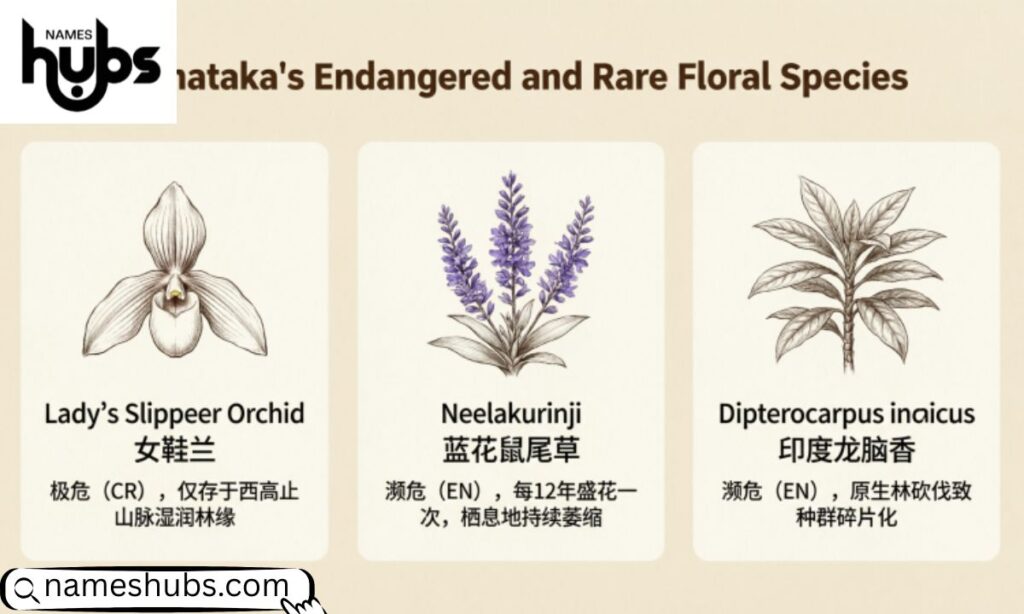
Karnataka is home to the Western Ghats, one of the world’s most important biodiversity hotspots. This region shelters hundreds of plant species found nowhere else on Earth. Flowers like the Neelakurinji (Strobilanthes kunthiana) bloom only once every twelve years, turning entire hillsides a stunning shade of violet-blue.
The Loulu Palm flower, the wild orchids of Coorg, and the rare Gloriosa Lily are among the most prized and fragile blooms of this land. Many of these plants grow only in specific altitudes and forest patches, making them extremely sensitive to any change in their surroundings.
Deforestation, expanding agriculture, and climate change are the biggest threats pushing Karnataka’s rare flowers toward extinction.
The Shola forests of Kodagu and Chikmagalur once provided safe shelter for dozens of rare flowering plants, but these forests are shrinking every year. Species like the Balsam flower (Impatiens) have many local varieties that are already disappearing before scientists even get a chance to study them properly. When a flower species vanishes, it doesn’t just mean one less pretty bloom — it often means losing an entire food chain, a medicine, or a cultural memory that local communities have carried for generations.
The Karnataka government and several environmental groups have stepped in to protect these fragile species through nature reserves, seed banks, and awareness campaigns. The Kudremukh National Park and Nagarhole forests now serve as protected zones where rare flowering plants can grow without human disturbance.
Botanists from universities across Karnataka regularly document new and endangered species, working to create proper scientific records before it is too late. Local communities, especially tribes like the Soligas and Kodavas, also play an important role as traditional guardians of these forests, passing down knowledge about rare plants through oral traditions that span hundreds of years.
Spiritual Symbolism of Colors in Kannada Flowers
In Karnataka’s rich spiritual traditions, the color of a flower is never just a visual detail — it carries deep meaning and is chosen very carefully for rituals, prayers, and offerings. White flowers like Jasmine (Mallige) and white lotus are considered the purest offerings to deities, symbolizing peace, clarity, and divine surrender.
When worshippers visit temples dedicated to Goddess Saraswati or Lord Shiva, they bring white blooms as a way of saying their heart is clean and their prayers are honest. This connection between white flowers and spiritual purity has been part of Karnataka’s culture for thousands of years and continues strongly even today in both village temples and city shrines.
Red and orange flowers carry the energy of power, courage, and auspiciousness in Kannada spiritual practice.
Hibiscus (Dasavala), the red Kanakambara (crossandra), and marigolds in deep saffron hues are the favorite offerings for Goddess Durga and Lord Ganesha. These vibrant colors are believed to attract divine attention and are used heavily during festivals like Navaratri, when temples are decorated with garlands of red and orange blooms from floor to ceiling.
The belief is that fire-colored flowers connect the worshipper to the fierce, protective energy of the deity, helping prayers reach their destination with greater power and urgency.
Yellow and golden flowers hold a special place in auspicious ceremonies, representing wealth, prosperity, and the blessings of a happy life. Sunflowers, yellow chrysanthemums, and the golden Champaka are widely used in wedding rituals and harvest festivals like Ugadi and Sankranti.
In Kannada astrology, yellow is also linked to the planet Jupiter, which governs knowledge and fortune, so yellow flowers are often offered during prayers for good education and financial well-being. Blue and violet flowers, though rarer, are considered deeply meditative and are connected to Lord Vishnu and Krishna — seeing blue lotus in temple art is a reminder that divine beauty transcends the ordinary world and points toward something timeless and eternal.
Flowers and Women’s Traditions in Karnataka
For women in Karnataka, flowers are not merely decorations — they are a living language of identity, emotion, and belonging. The tradition of wearing Mallige (jasmine) in the hair is one of the most iconic and beloved customs of the region, practiced by women of all ages and backgrounds.
In the mornings, flower vendors line the streets selling fresh jasmine strings alongside roses, marigolds, and champa blooms, and women stop to pick their favorite before heading to work, school, or temple. Wearing flowers in the hair is seen as a mark of femininity, cultural pride, and daily devotion to beauty — a small but meaningful act that connects a woman to her roots every single day.
Flowers also play a central role in the major milestones of a woman’s life in Karnataka. During a girl’s coming-of-age ceremony, she is bathed in flower water and dressed in garlands, with family women singing traditional songs around her. Wedding rituals are entirely built around flowers — the bride wears heavy garlands, her hair is decorated with jasmine and roses, and the wedding hall is transformed into a fragrant garden. Even in mourning, flowers accompany a woman throughout, as specific blooms are placed gently during final rites to honor the journey of the soul.
This lifelong relationship with flowers makes them one of the most intimate and consistent threads running through a Kannada woman’s entire life story.
Beyond personal adornment, women in Karnataka have historically been the keepers of floral knowledge — knowing which flowers to grow in the backyard, which ones to offer to which deity, and which blossoms bring good energy to the home. In rural Karnataka, women grow Tulsi, Parijata (night jasmine), and Kanakambara in small home gardens, performing daily flower offerings as part of their morning prayers.
Women from the Gowda and Lingayat communities are especially known for their elaborate flower-based rituals during festivals, creating intricate rangolis with flower petals that can take hours to complete. This knowledge, passed quietly from mother to daughter over generations, is one of Karnataka’s most beautiful living cultural inheritances.
Common Flowers for Beginners
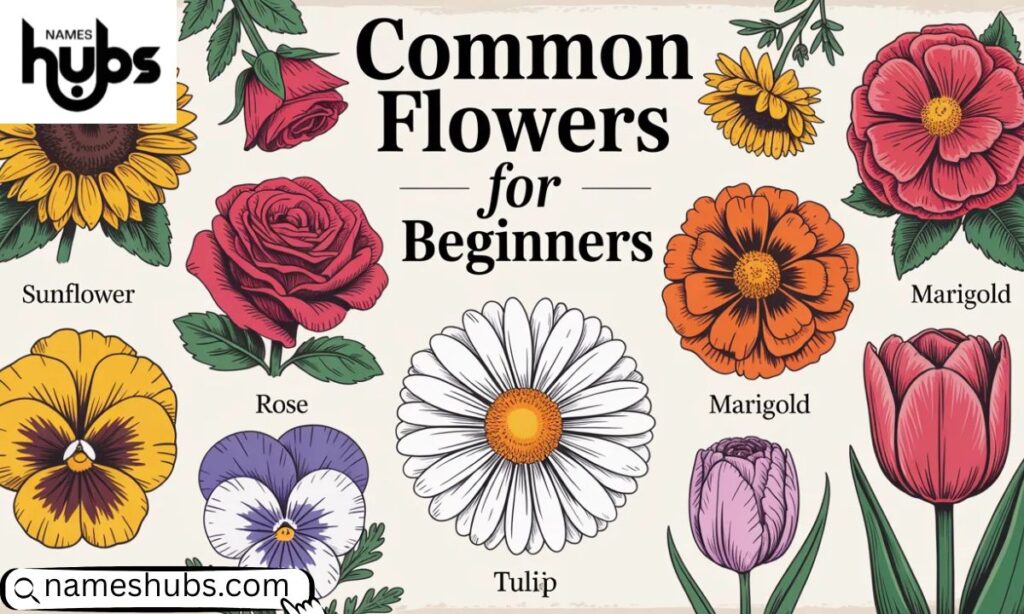
Agar aap pehli baar gardening shuru kar rahe hain toh kuch phool aisi hain jo aapko fail nahi honay deti. Marigold, yani gainda, in mein sab se pehlay aata hai. Yeh aam zameenon mein bhi aasani se ugta hai, zyada paani nahi chahiye aur rang bhi bohot khubsoorat deta hai. Isko ghar ke bahar ya ghamlay mein laga kar dekho, natija zaroor acha aaye ga.
Zinnia bhi aik acchi choice hai naye baghban ke liye.
Iska beej dalna behad aasaan hota hai, seedha zameen mein daal do aur thoda sa paani do, kuch haftton mein phool nazar aane lag jaata hai.
Isi tarah sunflower, yani surajmukhi, ek aisi paudha hai jo dhoop mein khoob khilti hai aur dekhne waale ko khushi deti hai. Yeh tino phool seedha zamanay se gharon ko rangeen kartay aa rahay hain.
Garden Flowers Learners Notice Often
Jab koi naya shakhs kisi bhi garden mein jaata hai, toh kuch phool aisi hoti hain jo har baar nazron mein aati hain. Petunia un mein se ek hai. Yeh nazuk si phool gunbad ke aakar ki hoti hai aur alag alag rangon mein milti hai, isliye beginners isey asaani se pehchaan lete hain.
Iska khayal rakhna bhi zyada mushkil nahi hota.
Isi tarah pansy phool bhi learners ke liye khas hai. Iski aankh jaisi banaawat ise sab se alag banati hai. Yeh phool thandi mausam mein bhi khilti hai jab baaki zyada tar flowers musumoon ka intezaar karte hain.
Bougainvillea ek aur phool hai jo naye gardeners ka dhyan kheenchti hai, kyunki iski gehra ranga aur wall par failne ki khasiyat use yaadgaar banati hai.
Decorative Flowers with Borrowed Names
Bohat si phoolon ke naam alag alag zabaan se udhaar liye gaye hain aur ab un ke apne nahi rehay. Dahlia ka naam aik Swedish scientist ke naam par rakha gaya tha, magar aaj yeh har jagah ek common naam ban chuka hai. Iski ghani pankhuriyan aur gehra rang ise ek maqbool decorative flower banate hain.
Isi tarah Hydrangea ka naam Greek se aaya hai jis ka matlab hai “paani ka bartan.” Iska naam is liye rakha gaya kyunki yeh bohot zyada paani peeti hai. Gazania bhi aik aisi phool hai jis ka naam borrowed hai, yeh Africa se aai magar Greece ke naam se jaani jaati hai.
In tamam phoolon mein ek cheez sanjhi hai, yeh apne naam se zyada apne rang aur khubsurati ki wajah se pehchane jaate hain.
Flower Names in Kannada for Worship and Decoration
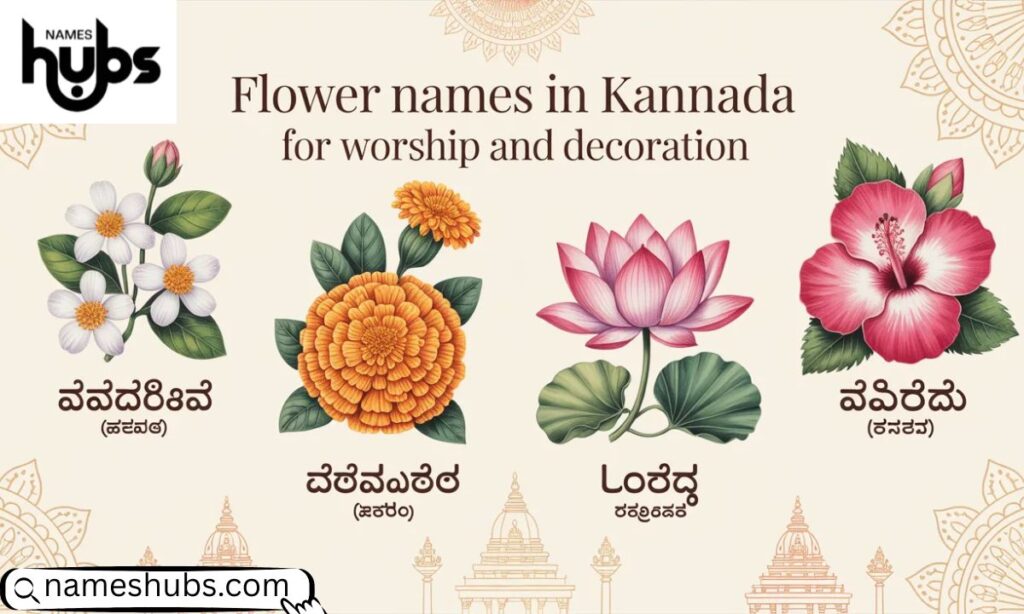
Karnataka mein phoolon ka riwaj pooja se lekar ghar ki sazawat tak har jagah nazar aata hai. Kanakambara, jo orange rang ki ek nazuk phool hai, temple mein chadhane ke liye sabse zyada istemal ki jaati hai. Iski mehak halki aur dilkash hoti hai.
Sampige, jo champa ka Kannada naam hai, ko bhi puja mein aur hair decoration mein bohot pasand kiya jaata hai.
Jasmine ko Kannada mein Mallige kehte hain aur yeh women ke baalon mein sajane ka ek bohot purana riwaj hai.
Shadiyon aur tyoharon par iski maang bohot zyada barh jaati hai. Sevanthi, jo chrysanthemum hai, shehjaadon aur decorative rangolis mein use hoti hai. In phoolon ka zikr sirf botany mein nahi balki Kannada kavitaon aur gaanon mein bhi aata hai.
Fragrant Flowers Used in Pooja
Pooja ke liye sirf dekhne mein khubsoorat phool nahi, balki unki mehak bhi bahut maayne rakhti hai. Maana jaata hai ke khushbu se maahol pavitra hota hai aur mann ko sukoon milta hai. Champa, yaani Plumeria, is sab mein sabse pehli aati hai. Iski mooti mithi khushbu mandir aur ghar dono jagahon ko mehka deti hai.
Raat ki rani, jo raat ko hi khilti hai, ka pooja mein istemal aam hai, khaaskar un raasmaat pooja mein jo raat ko ki jaati hain. Iski gehri, intoxicating khushbu ek khaas maahol paida karti hai. Ketaki, jo kewda ka phool hai, bhi pooja mein use hota hai lekin ek ilahi kahani ke mutabiq Shiva ki pooja mein isey nahi chadhaya jaata. Har phool apni khushbu ke sath ek alfaaz se zyada kuch kehti hai.
Frequently Asked Questions
What are the 110 flower names in Kannada with meanings?
This list includes popular and unique flower names in Kannada along with their meanings and simple explanations for easy learning.
How can I learn flower names in Kannada with images?
You can learn flower names faster by using pictures because images make it easier to remember names and meanings.
Which flowers are most popular in Karnataka?
Popular flowers in Karnataka include rose, jasmine, lotus, marigold, and sunflower, often used in homes and festivals.
Why should kids learn flower names in Kannada?
Learning flower names in Kannada helps kids improve vocabulary and understand local language and nature better.
Are flower names in Kannada useful for school learning?
Yes, flower names are often useful for school projects, language practice, and basic learning activities.
Can I find Kannada flower names with English meanings?
Yes, many flower name lists include Kannada names with English meanings to help easy understanding and learning.
What are some easy flower names to remember in Kannada?
Simple flower names like rose, lotus, jasmine, and sunflower are easy to learn and commonly known.
How do images help in learning Kannada flower names?
Images make learning more fun and help people quickly recognize flowers and remember their Kannada names.
Where are flowers commonly used in Karnataka culture?
Flowers are used in temples, weddings, festivals, home decoration, and traditional celebrations across Karnataka.
How can beginners start learning flower names in Kannada?
Beginners can start by learning common flower names with images and practice speaking them every day.
Conclusion
Learning flower names in Kannada is a fun and helpful way to understand the beauty of nature and the local language of Karnataka. With 110 flower names, images, and meanings, it becomes easier for kids, students, and language learners to remember and enjoy new words. It also helps people connect with Kannada culture and daily life in a simple way. Flowers are an important part of traditions, festivals, and nature, making this learning journey more meaningful.
By exploring these flower names, you can improve your Kannada vocabulary while also learning about different flowers and their importance. Images make learning more interesting and help in quick understanding and memory. Whether you are a beginner, a parent teaching children, or someone interested in Karnataka culture, this guide can be a useful and enjoyable resource. Keep learning and discovering the beauty of flowers through language.

